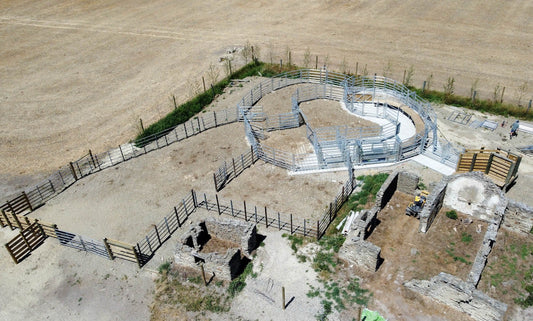
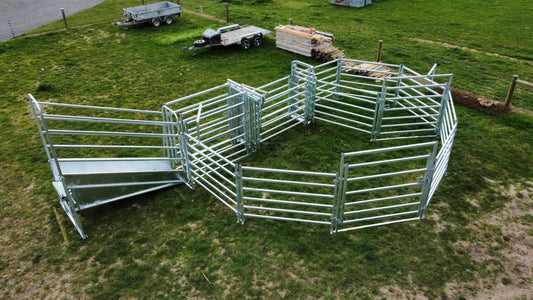
Most cattle farmers spend serious time thinking about yards, races, and crush equipment. And fair enough. Those are the pieces you interact with every day. But there's one element that quietly determines whether your whole setup actually works, and it barely gets a mention until something goes wrong.
Drainage. Or more accurately, the lack of it.
A single heavy rainfall event can undo months of herd health progress. Wet, compacted holding areas create the conditions for foot rot, mastitis, and respiratory issues. They stress your animals, slow your handling, and turn what should be a straightforward job into a filthy slog. And if you're in a region where wet seasons are the norm, a poorly drained yard isn't a seasonal inconvenience. It's a recurring operational failure.
That's a strong claim. But if you've stood in ankle-deep mud trying to work a mob after two days of rain, you already know it's true.
The Hidden Costs Nobody Talks About
Bad drainage doesn't announce itself as a cost centre. It shows up in other ways.
There's the animal health side. Prolonged wet conditions increase the risk of lameness and skin lesions. Stressed cattle are harder to handle, which slows your work and increases the risk of injury to both stock and people. Heavier mud conditions mean cattle arrive at the crush in worse condition, and they leave in worse condition too.
Then there's the infrastructure side. Yards that sit in standing water corrode faster, regardless of how well they were built. Post footings shift when ground becomes consistently waterlogged. Concrete surfaces crack and pit. The investment you made in your setup starts working against you.
And then, increasingly, there's the regulatory side. Environmental rules around effluent and runoff are tightening across New Zealand. Sediment-laden runoff from holding yards and races is a real concern for waterways, and if your setup can't demonstrate basic containment and drainage control, you're exposed. Not just reputationally. Legally.
What Good Drainage Actually Requires
Here's where things get more practical, because "sort out your drainage" is advice that means nothing without specifics.
The foundation of a well-drained yard is gradient. Concrete or compacted surfaces need enough slope to move water toward collection points, but not so much that cattle are working on an unstable surface. Generally, a 1 to 2 percent fall is the target. Enough to shift water. Not enough to cause footing problems for your stock.
From there, where that water goes matters enormously. A yard that drains quickly but discharges straight into a neighbouring waterway isn't a solved problem. It's a liability. You need a collection system, whether that's a sump, a sediment trap, an effluent pond, or some combination, that captures runoff before it leaves the property. The specifics depend on your scale, your region's rainfall intensity, your soil type, and your local council requirements.
This is where the content most farmers find online lets them down. Generic advice says "ensure adequate drainage" and moves on. That's not useful when you're trying to work out whether you need to engage a civil contractor, talk to an agricultural engineer, or whether a relatively straightforward retrofit will do the job.
The honest answer is: it depends, but here's a framework.
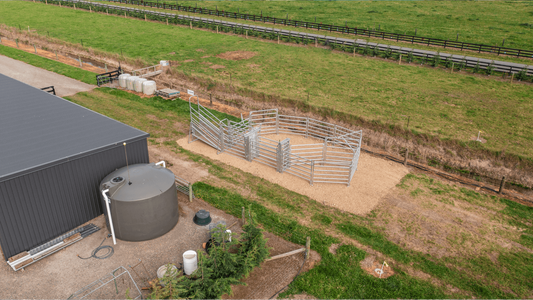
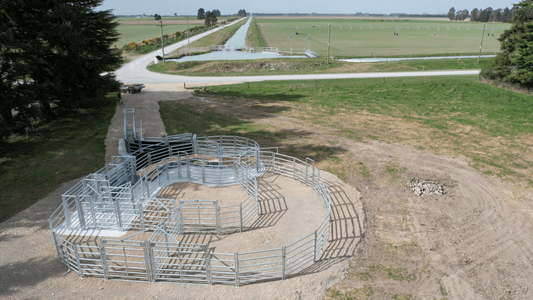
If you're building from scratch, drainage needs to be designed in from day one. It's far cheaper to get the groundworks right before the concrete goes down than to address it after. Get your site assessed for natural fall, proximity to waterways, and soil drainage capacity before you finalise a yard layout. The orientation of your yard, the position of your races, even where the truck loading ramp sits, all of these affect where water will pool and how easily it can be moved off.
If you're retrofitting an existing setup, start by identifying where water is actually collecting during and after rain events. Often there are one or two specific problem areas rather than a whole-of-yard failure. A targeted intervention, reshaped concrete, an added drain channel, a redirected outlet, can make a significant difference without a complete rebuild.
Small Operations Need This Conversation Too
A lot of the available content on yard drainage focuses on large feedlots or commercial operations. If you're running a smaller mob on a lifestyle block or a part-time farming setup, it can feel like this advice doesn't apply to you.
It does. The scale is different, but the problems are the same. Standing water creates the same health risks for twenty cattle as it does for two hundred. And in some ways, smaller operators are more exposed on the regulatory side, because a complaint from a neighbour or a routine inspection is harder to absorb when you don't have a full-time farm manager and a team behind you.
Getting your drainage right doesn't have to mean a major capital project. Sometimes it means regrading a small section, adding a basic collection point, or making sure your effluent isn't finding its way off the property. But it does mean taking it seriously rather than treating it as an afterthought.
The Resale Argument Nobody Mentions
One more angle worth considering: property value.
A cattle setup that handles wet conditions well, that can be worked year-round without turning into a mud pit, is a genuinely more valuable asset than one that can't. Buyers who know livestock will look hard at drainage when they inspect a property. Yards that clearly manage effluent and runoff correctly tell a story about how the whole operation has been run. They signal professional management.
In a farming sector that faces increasing public and regulatory scrutiny around land stewardship and waterway protection, being able to demonstrate good practice isn't just about compliance. It's about the long-term value and reputation of your property.
Getting It Right From the Start
If you're planning a new yard build, drainage is not a detail to sort out later. It belongs in the same early conversation as yard size, layout, and crush position. The ground your yards sit on, and what happens to water when it falls on them, is as fundamental to how your setup performs as the yards themselves.
If you're already up and running but dealing with recurring wet-weather headaches, it's worth doing a proper assessment before the next wet season rolls around. The cost of getting drainage right is almost always lower than the ongoing cost of getting it wrong.
At Onefarm, we're not civil engineers or drainage consultants. But we've worked on enough yard builds across New Zealand to know that the farms where the whole setup runs well are the ones where drainage was thought about early, not bolted on as an afterthought.
If you're planning a build and want to talk through what site prep and ground conditions need to look like before yards go in, flick us a message. We're happy to point you in the right direction.