Every serious injury in a cattle yard has a moment before it. A gate not quite latched. A drafting race too narrow to move through quickly. An animal that's spooked because it can see shadows and movement ahead of it. These aren't freak accidents. They're design failures dressed up as bad luck.
New Zealand farming puts people close to large, unpredictable animals day in, day out. That's just the job. But the difference between a close call and a trip to the hospital isn't always operator skill or animal temperament. Often, it comes down to whether the yard they're working in was designed with safety in mind from the start.
This is our honest take on what cattle yard safety actually means in practice, and why good design is the most underrated safety tool on any property.
The injury risk most farmers underestimate
Ask any experienced stockperson, and they'll tell you the most dangerous moment in the yard isn't when an animal is fully agitated. It's the moment just before. The shift in weight, the flick of the ear, the shoulder that swings into a rail you thought had a bit more room.
Crush injuries account for a significant share of serious farm incidents in the livestock sector. And the majority of them happen in yards that were built to move cattle, not protect people. There's a difference. A yard built purely for throughput often leaves no safe exits, no proper escape gaps, and no room for error when an animal decides it's not going where you planned.
The financial cost sits on top of all of that. Time off work. ACC claims. Insurance reviews. Temporary labour to cover for someone who can't muster for three months. For family operations, especially, one serious injury doesn't just hurt the person involved. It can genuinely set back the whole business.
Animal behaviour and yard design are the same conversation
Here's where a lot of safety conversations go wrong. People talk about PPE, about not working alone, about emergency procedures. All of that matters. But very few people talk about the fact that a stressed animal is a dangerous animal, and that yard design is one of the biggest drivers of animal stress.
Temple Grandin's work on livestock behaviour changed how serious operators think about this. Cattle are prey animals. They move away from pressure, they react to what they can see ahead of them, and they're acutely sensitive to sudden noise, shadows, and dead ends. A yard that creates those conditions doesn't just make stock handling harder. It makes it actively more dangerous for the people in it.
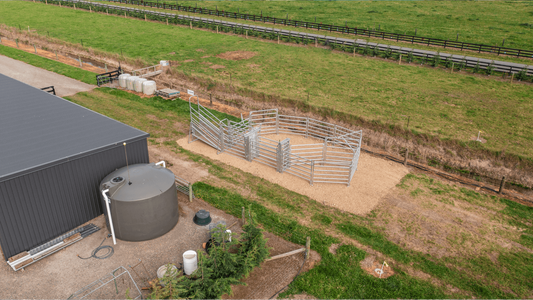
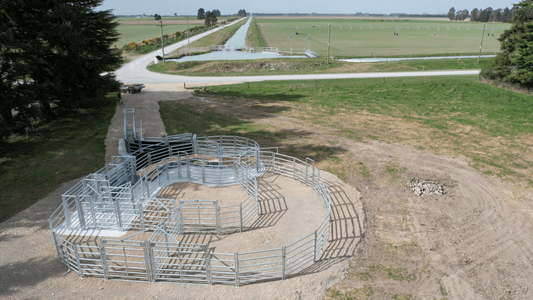
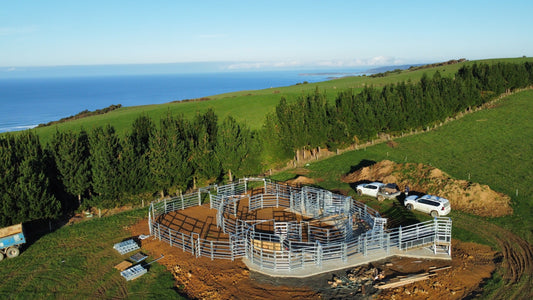
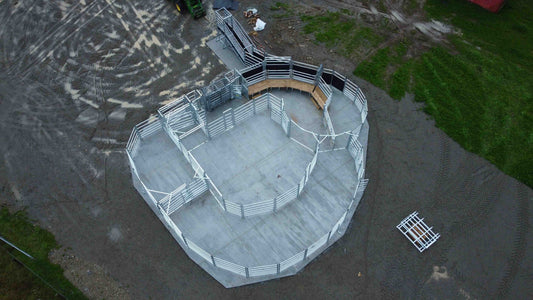
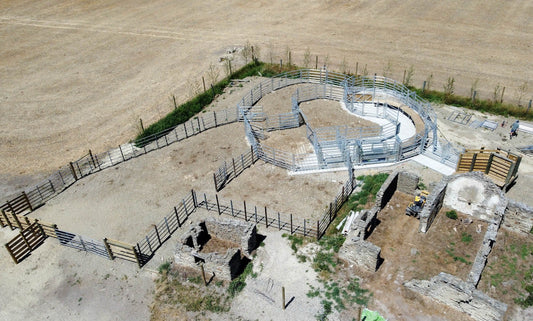
A curved yard system, for example, uses cattle's natural tendency to want to return the way they came. They follow the curve willingly. That means less forcing, less noise, and less pressure on both the animal and the operator. Calmer cattle means calmer work. It sounds simple because it is simple, once the design reflects the science.
When we talk to farmers about yard upgrades, behaviour-led design comes up every time. Not as a nice-to-have. As a baseline requirement for anyone who wants to work more safely and more efficiently.
The small operator gap
Here's something that doesn't get said enough. Most yard safety content is written for large commercial stations with dedicated health and safety managers and a full crew on deck. But the majority of New Zealand cattle operations are family-run. You might be working the yards with one other person, or doing certain jobs solo. That changes the risk profile entirely.
Solo operation raises the stakes on everything. If you're running a mob through a drafting race on your own, every element of that yard needs to be working in your favour. Gate latches that operate one-handed. Escape gaps at regular intervals. A crush that holds an animal securely without requiring a second person to manage it from the other end.
This is where quality of equipment matters as much as layout. Yards that rattle, that have gates sagging off their hinges, that need two people just to keep functioning safely, those yards are a liability. Not just in terms of injury risk, but in terms of the mental load they put on the operator every single time they're used.
Good yard design for small and mid-scale operations isn't a scaled-down version of commercial design. It's its own discipline, and it deserves to be treated that way.
Noise is a safety issue, not just an annoyance
This one surprises people. Loud yards aren't just frustrating. They're a genuine safety hazard.
Excessive clanging and rattling from steel components does two things. It stresses the cattle, which makes them harder to handle and more likely to react unpredictably. And it makes communication between operators harder, which increases the risk of misread signals at exactly the moments when clear communication matters most.
Well-built yards are noticeably quieter. That's not a luxury feature. It's a functional one. When your rails and gates sit properly, when components are fitted to tolerance and secured correctly, the whole yard operates more calmly. That calm is a safety benefit you feel every single time you work it.
What actually makes a yard safe
Bringing this together, the safest yards share a few consistent traits.
They're designed around how cattle actually move, not just how many head they can hold. They give operators safe positions, clear sightlines, and multiple exit points from any working area. They use equipment that functions reliably under pressure, not just when conditions are ideal. And they're built to a standard that doesn't degrade quickly, because a yard that's starting to fail structurally is one that introduces new hazards every season.
Rail strength matters here too. Lateral pressure is how cattle load a rail, not vertical weight. A deeper rail profile resists that load better than raw gauge thickness. Our 47mm deep cattle rail is 15% stronger than most alternatives for exactly this reason. That structural integrity isn't an abstract spec. It's what keeps a gate or panel in place when a 600kg animal decides to test it.
The opinion, plainly stated
The farms that treat yard design as a safety decision, not just a productivity decision, run better operations. The animals move better, the work is less stressful, and the people doing it go home in the same condition they arrived in.
Spending more upfront on a well-designed, properly built yard is not a cost. It's a calculation. Compare it against one serious injury, one compensation claim, one season with half your workforce sidelined, and the maths becomes very straightforward very quickly.
If your current yards make you tense every time you work them, that tension is telling you something. It's worth listening to.
We've worked with operations of all sizes across New Zealand, from lifestyle blocks to large commercial stations, and the conversation about safety and design is always connected. If you want to talk through what a safer yard setup might look like for your property, flick us a message. There's a Kiwi on the other end who knows this stuff.