Most lifestyle block owners wait until something goes wrong before they build proper cattle yards. A cow goes through a fence. Someone gets pinned against a gate. A routine drenching job turns into a two-hour ordeal that ends with a bruised rib and a bad mood. Only then does the conversation shift from "we should probably get some yards sorted" to "right, we're getting yards sorted."
That's a pattern worth breaking.
Cattle yards for lifestyle blocks aren't just a nice-to-have infrastructure upgrade. They're the difference between managing your animals and being managed by them. Getting that infrastructure right from the start is a lot cheaper, physically and financially, than getting it wrong.
This post gives you a straight opinion on what you actually need if you're running a small herd on a lifestyle property.
Small Herd Doesn't Mean Small Risk
There's a common assumption that if you've only got five or six cattle, you can get by with makeshift arrangements. A bit of electric tape here, a temporary crush there, maybe borrowing the neighbour's gear when things get serious.
Plenty of people do get by that way. Until they don't.
A 500kg Angus that doesn't want to go where you want it to go is just as dangerous whether you've got six of them or 60. The math on that doesn't change with herd size. What does change is the scale and layout of the yards you need. And that's where the real conversation for lifestyle block owners should start.
There's also a family dimension worth naming directly. If kids are on the property, or if you're often handling stock solo, the margin for error gets very thin very fast. The difference between a good day and a hospital visit often comes down to your yards.
What a Basic But Functional Setup Actually Looks Like
You don't need a 100-head commercial system. But you do need something genuinely fit for purpose.
At a minimum, a well-designed lifestyle block yard setup should give you:
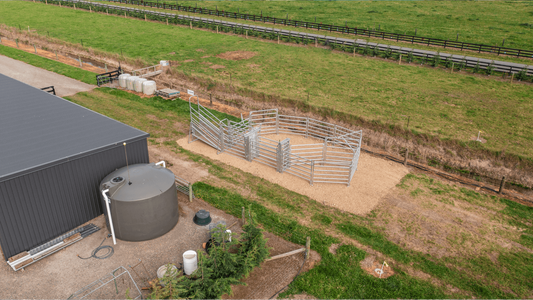
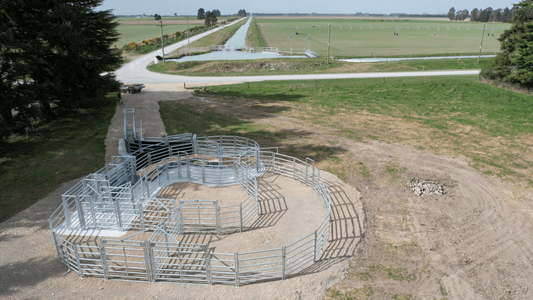
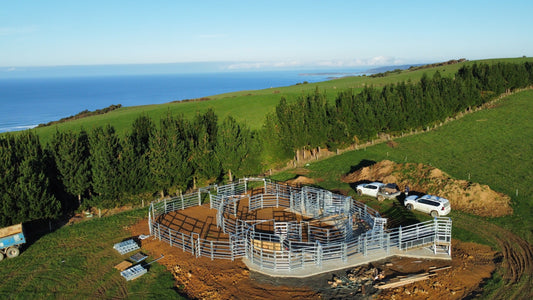
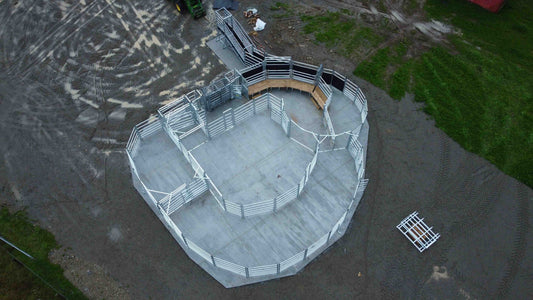
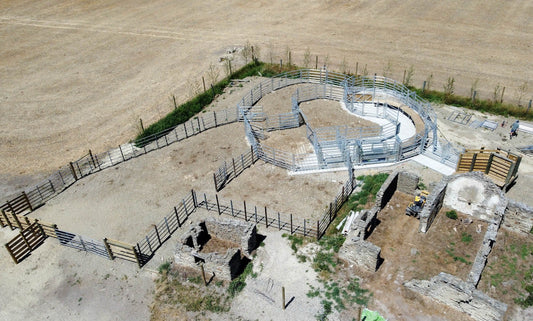
A drafting area where you can separate animals without chasing them around a paddock. A holding pen sized appropriately for your herd. A crush or vet race where you can safely restrain an animal for drenching, pregnancy testing, or treatment. And a loading facility if you're moving stock on and off the property.
That's the core of what makes handling safe and practical. Get those four elements right and you'll wonder how you ever managed without them.
The specific configuration will depend on your site. Lifestyle blocks often have more awkward layouts than commercial farms — smaller paddocks, odd angles, trees in inconvenient spots. That's one of the strongest arguments for getting proper advice on your yard design before you buy anything. A setup that works beautifully on a flat commercial block can be a nightmare to use if it's been squeezed into the wrong corner of your property.
The Cost Question (And Why People Get It Wrong)
This is where opinions tend to diverge, so here's a direct one.
Most people underestimate the cost of a good small-scale setup because they only price the panels. They forget the crush. They forget the groundworks. They forget the gates, the latches, the loading ramp. And they forget that a cheap system that fails at the wrong moment isn't actually cheap at all.
A well-built, compact yard system for a lifestyle block with a small herd, something with a proper head bail, holding pen, and drafting setup in steel, is likely going to sit somewhere in the range of $10,000 to $30,000 depending on configuration and site requirements. That's a real number, not a figure pulled from thin air.
Is that a lot of money? It depends on how you think about it.
If you're running beef cattle on your block as even a modest commercial exercise, the return on that investment comes quickly. Fewer hours wrestling animals. Less stress. Less risk. Fewer vet callouts because you couldn't safely restrain an animal that needed treatment. If you're running stock purely for lifestyle purposes, it's still a safety investment first and a convenience investment second. Both are worth making.
What it's not worth doing is spending $4,000 on something that doesn't actually do the job and then spending another $15,000 fixing it two years later.
Portable vs. Permanent: The Question Most People Skip
One thing that doesn't get discussed enough for lifestyle block owners is whether a permanent fixed installation is actually the right call.
For some properties and some operators, a modular or portable system makes a lot of sense. If you're on a lease, if you're still figuring out the best location on the block, or if your herd size is going to change significantly in the next few years, locking yourself into a permanent concrete-footed setup might not be the smartest first move.
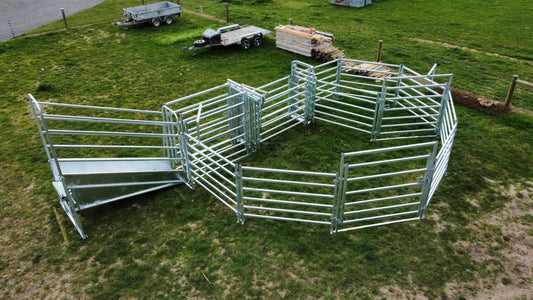
Portable steel panel systems can be configured into a functional yard setup that you can adapt as your needs change. They're not a compromise. Done properly, they're a practical choice that gives you real handling capability without committing to a layout before you're sure about it.
That said, if you know where you want your yards and you're planning to be on the property long-term, a permanent installation is the better investment. It'll be more robust, easier to use, and it adds genuine value to the property.
The honest answer is: it depends on your situation. Which is exactly why talking to someone who handles both options is worth doing before you commit.
What to Watch Out For When You're Comparing Systems
Not all yard systems are built the same, and the price differences aren't always obvious until something goes wrong.
A few things worth paying attention to:
- Rail Profile Matters. Thinner profile panels bend. Bent panels are annoying at best and dangerous at worst. Ask about the specifications before you buy.
- Galvanising quality is not a detail. Hot-dipped galvanising lasts significantly longer than cold galvanising or paint. On a lifestyle block where the yards might not see constant use, you want steel that's going to still look and perform well in 20 years without constant maintenance.
- Crush design is worth spending time on. A crush that doesn't open properly, doesn't give you good access to the animal, or rattles under pressure is a daily frustration. It's also where a lot of handling accidents happen. Don't cut corners here.
- Gate and latch design is underrated. You'll use those gates a hundred times more than you think. Simple, reliable latches that work with one hand and don't freeze up or jam are worth paying for.
The Bottom Line
Cattle yards for lifestyle blocks don't need to be complicated. But they do need to be right.
The farms that run smoothly aren't the ones with the most infrastructure. They're the ones where the infrastructure that exists actually does what it's supposed to do. A compact, well-designed yard setup built to suit your herd size, your site, and the way you actually work will pay for itself in time, safety, and peace of mind faster than most people expect.
If you're at the stage of figuring out what you need, the best starting point is a conversation with someone who's designed yards for lifestyle blocks specifically, not someone trying to sell you a scaled-down commercial system that doesn't quite fit.
Flick us a message and we'll talk through what makes sense for your setup. No pressure, just practical advice from people who know stock handling.