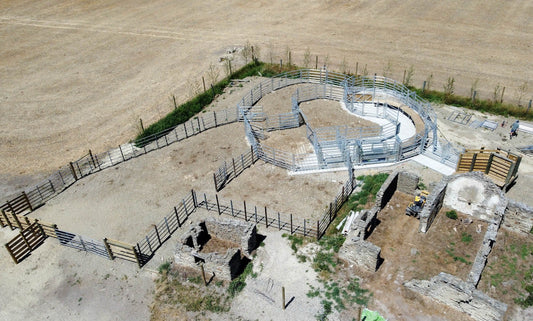
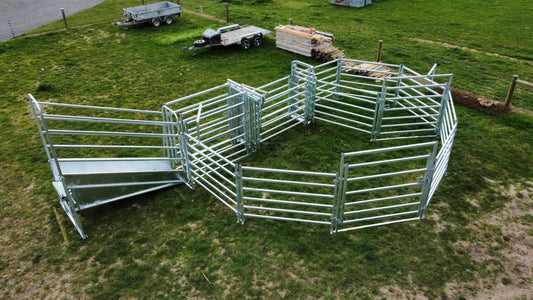
You only notice a crush is wrong for your operation when you're fighting a 600kg Friesian at 6 am in the rain, wondering why you didn't spend more time on this decision before you spent the money.
It's a common story. Farmers choose a crush based on price or availability, get it delivered, bolt it down, and live with the consequences for the next fifteen years. A crush that's awkward to operate solo, noisy enough to stress a whole mob, or too light-framed for the stock it's supposed to handle isn't just frustrating. It costs you time on every single working day it's in use.
So before you commit, here's what actually matters when choosing a cattle crush for New Zealand conditions.
Why NZ Conditions Change the Calculus
New Zealand farming covers a huge range of terrain and operation types. A steep hill country block in Hawke's Bay puts very different demands on a crush than a flat Bay of Plenty dairy platform. Terrain affects where you can site the crush, how cattle approach it, and whether a standard layout is even practical.
Then there's temperament. Beef cattle that have had minimal human contact over summer handle very differently from dairy cows used to a daily routine. A crush that's fine for calm, handled stock can become a serious safety risk with wilder animals.
And then there's the weather. Most NZ farmers are working outdoors in conditions that range from acceptable to genuinely unpleasant. A crush that's slow to operate, prone to jamming, or difficult to reset under pressure makes hard days harder.
None of this is covered by a spec sheet that just lists pipe diameter and overall dimensions. You need to think about how the crush will actually function in your environment, on your farm, with your stock.
Frame and Rail Strength: Get This Right First
A common claim in the industry is that steel gauge or wall thickness determines how strong a crush is. Thicker steel sounds more robust, and it can be. But it's not the whole picture.
What actually matters for cattle handling is rail profile depth. Cattle apply lateral pressure when they push against a crush, and it's depth that resists that load. A deeper rail profile is structurally more effective than raw gauge thickness alone.
At Onefarm, our 47mm deep cattle rail is 15% stronger than most alternatives for exactly this reason. When a stressed animal throws its weight against the side of a crush, you want the frame to absorb that force without flexing. Flex means noise, and noise means more stress, and more stress means a harder job for everyone involved.
So when you're comparing crushes, don't just ask how thick the steel is. Ask about the rail profile depth and how the frame is engineered to resist lateral load.
Vet Access, Squeeze, or Both?
Two questions decide which crush suits your setup: do you need vet access, and do you need a squeeze?
Vet access earns its keep if you're regularly calving or treating animals beyond routine handling. If most of your crush time is drenching, tagging, and standard yard work, vetless does the job without the extra you won't use. A squeeze narrows the internal width to hold stock firmly, useful if you're running a range of sizes through one crush. With consistent stock size, you likely don't need it.
With Onefarm, you’ll have four options:
Gryphon: Vetless, no squeeze
Gryphon Pro: Vetless, with squeeze, dual anti-backing and split gates both sides
Phoenix: Vet access, no squeeze
Phoenix Pro: Vet access and squeeze together
All four share the same 80x50x5mm frame, hot-dipped galvanising after welding, and ratchet-style headbail lock. For more information, check out the full range here.
Solo Operation: More Relevant Than Most Marketing Acknowledges
A large number of NZ farms, particularly lifestyle blocks and smaller beef operations, run on one or two people. And yet most crush marketing focuses on cattle throughput and mob management as if there's always a full crew available.
If you're often working alone, the crush you choose needs to reflect that reality.
Think about gate placement and which side they operate from. Think about whether you can move from the rear of the crush to the headbail without passing through the animal's flight zone. Think about how the headbail releases, how much force it takes, and whether you can safely reset it under pressure without a second set of hands.
These aren't edge-case concerns. For solo operators, they're the core of whether a crush works or doesn't.
Galvanising and Longevity in NZ Conditions
New Zealand's climate is hard on steel. Coastal properties deal with salt air. High-rainfall regions keep equipment wet for long stretches. Even a well-made crush will corrode quickly if the finish isn't up to the conditions.
Hot-dipped galvanising is the standard worth looking for. The process coats the steel thoroughly, including inside hollow sections, which is where rust typically starts. Painted finishes look fine when new, but chip and scratch over time, exposing bare metal.
Ask whether the crush has been hot-dipped galvanised after fabrication, not before. If the steel is cut or welded after galvanising, those exposed areas won't have the same protection as the surrounding surface.
This matters because a crush isn't a two-year purchase. It's an investment you'll be looking at every working day for the next decade or more. Longevity is worth paying attention to upfront.
What to Ask Before You Buy
Before you commit to any crush, run through these questions:
- What rail profile depth does the crush use, and how does that compare to alternatives?
- Is the steel hot-dipped galvanised after fabrication, and does that include internal surfaces?
- Can the crush be safely operated by a single person, and from which side do the primary controls sit?
- What specific design features reduce noise during stock entry and gate operation?
- Does the supplier have people in New Zealand you can speak to directly?
These aren't trick questions. Any reputable supplier should be able to answer them clearly. If the answers are vague or the salesperson pivots quickly to price, treat that as useful information.
Finding the Right Fit
There's no single crush that works for every operation. A Commercial-scale beef farmer running large mobs through a permanent setup has different requirements than a lifestyle block farmer handling six cattle three times a year. The right choice depends on your stock type, terrain, how many operators you typically have, and what you're planning to handle over the life of the equipment.
What we can tell you is that getting this decision right upfront is worth taking your time over. A crush that genuinely suits your operation makes every handling day safer, faster, and less stressful. For you and for the animals.