Most farmers upgrade their equipment long before they upgrade their yards. New quad, new head torch, new crush. Meanwhile, the yard layout they're working with is fighting them at every turn, and they've quietly accepted that as just how it is.
It doesn't have to be.
Two components in particular make a bigger difference to day-to-day stock handling than almost anything else in your yard: the forcing pen and the drafting gate. Get these right, and you'll move cattle more efficiently, with less stress on the animals and less risk to the people working them. Get them wrong, and every day in the yards becomes harder than it needs to be.
This is our take on how these two elements work, why circular design matters, and what to look for when you're thinking about your own setup.
Why Your Forcing Pen Shape Actually Matters
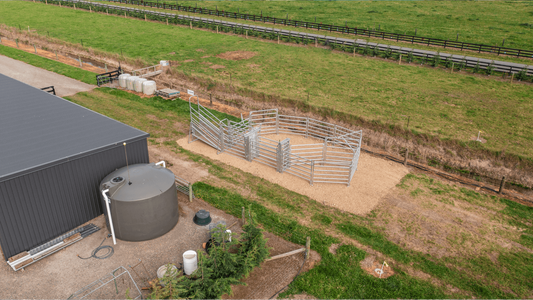
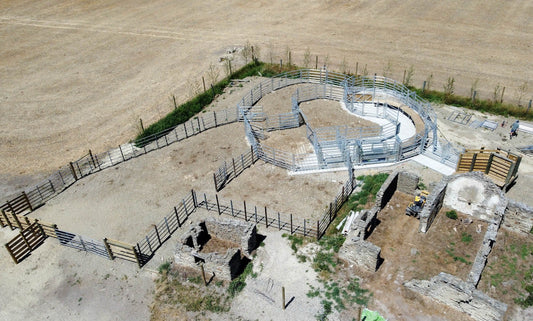
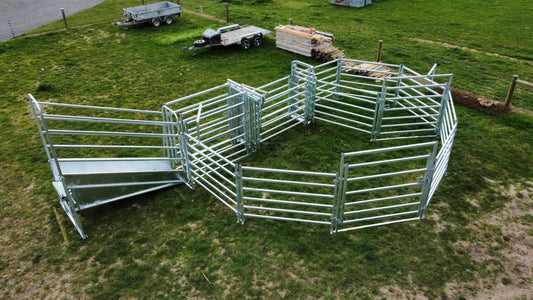
A forcing pen is the holding area that funnels cattle from the main yard into the race or crush. It sounds straightforward. But the shape of that pen has a significant effect on how cattle behave inside it.
Straight-sided rectangular forcing pens are common. They're also the source of a lot of frustration. Cattle pushed into a square corner will baulk, spin, and pile on each other. The natural response is to chase them harder. That increases stress, raises the risk of injury, and slows everything down.
Circular forcing pens work differently, and the reason comes down to how cattle actually think and move.
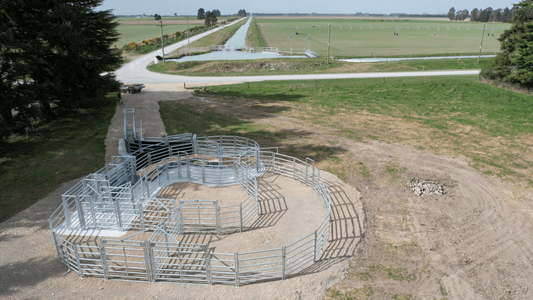
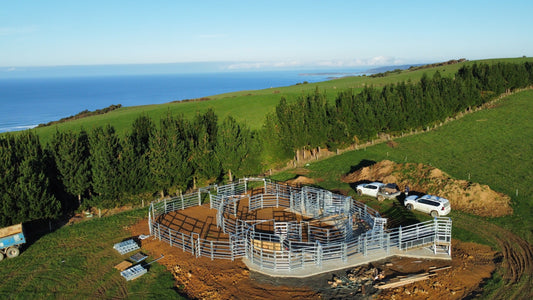
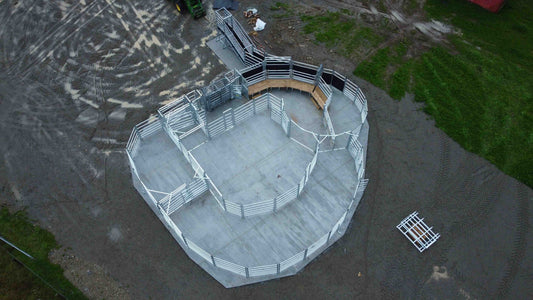
Cattle have a follow instinct. They're comfortable moving in a curve because it gives them the sense they're heading back towards the mob. A circular or curved pen uses that instinct rather than working against it. When cattle enter a well-designed circular pen and the gate is swept behind them, they move steadily forward toward the race entrance without needing to be pushed hard.
This isn't new thinking. Temple Grandin, the animal behaviourist whose work has shaped livestock handling practice internationally, identified decades ago that curved race systems significantly reduce the effort required to move cattle through a yard. The science has been consistent since. Circular design isn't a nice-to-have. It's livestock best practice.
We've written in more detail about whether cattle yards should have a circular forcing pen [here](https://www.onefarm.co.nz/blogs/news/should-cattle-yards-have-a-circular-forcing-pen) if you want to go deeper on the reasoning.
The Circular No-Trip: What Sets a Good Design Apart
Not all circular forcing pens are built the same. The detail that matters most is what happens at floor level.
A poorly designed circular pen will have a gate track or frame that creates a lip on the ground. Cattle stepping over it hesitate, trip, or panic. That's exactly the kind of unpredictable behaviour that puts both animals and workers at risk.
A well-designed circular no-trip forcing pen eliminates that completely. There's no ground-level obstruction. Cattle flow into the race without breaking stride. It sounds like a small thing until you've watched the difference in person.
When we talk about circular no-trip design at Onefarm, this is what we mean. The geometry of the pen and the quality of the gate sweep matter as much as the steel itself.
Drafting Gates: More Than Just a Divider
Once cattle are moving through the race, the drafting gate is what lets you sort them. It's the point where a mob of mixed animals becomes organised groups: cows from heifers, treatment cattle from the main mob, animals heading to the race from those returning to the paddock.
Done well, drafting is fast and calm. Done badly, it's the most frustrating job on the farm.
A drafting gate sits at a junction in the race. When a beast approaches, you direct it left or right. In a basic setup, you're doing this manually with a gate handle. In more sophisticated setups, the gate can be operated remotely, either mechanically or electronically.
The critical factors in any drafting gate, regardless of type, are speed, reliability, and reach.
Speed matters because cattle don't slow down for a gate that's half a second behind. If you're manually drafting and the gate sticks, you've lost the beast, and now you're sorting the hard way.
Reliability matters because a gate that fails under pressure isn't a drafting gate; it's a liability. Welds, pivots, and latch mechanisms all need to hold up under real working conditions, not just when they're new.
Reach matters because the person operating the gate needs to direct the animal without stepping into the race. Good gate placement and handle length keep the operator out of harm's way.
Manual, Mechanical, or Electronic?
This is where farmers often have strong opinions, and fairly so.
Manual drafting gates are the most common on smaller operations. They're straightforward, cost-effective, and don't require power or hydraulics. For a farmer working a modest mob, a well-positioned manual gate operated by someone who knows the cattle is hard to beat.
Mechanical drafting gates introduce leverage and distance. You're no longer standing right at the gate junction, which improves safety. These suit mid-scale operations where you're regularly moving larger numbers and want a bit more control without the cost of a full electronic setup.
Electronic drafting gates are the top of the range. Operated from a distance, often integrated with EID tag readers and weigh scales, they allow one person to do work that might otherwise need two or three. For commercial operations with large headcounts and regular mustering requirements, the efficiency gains are real and measurable.
That said, this comes with complexity and more things that can go wrong than a mechanical system.
The right choice depends on your operation. There's no universal answer. What we'd say is this: don't let the most basic gate become a bottleneck on a yard that's otherwise well-designed.
How These Two Elements Work Together
The forcing pen and the drafting gate aren't separate decisions. They're part of the same system.
A circular forcing pen that moves cattle smoothly into the race is most valuable when the race and drafting point are designed to maintain that forward momentum. If cattle flow well from the pen and then hit a poorly positioned drafting gate, you've fixed half the problem.
Think of the yard as a sequence. Cattle arrive in the forcing pen, move to the race, pass through the drafting point, and reach the crush or exit. Every element in that sequence should be reducing pressure rather than adding it. Circular design and good gate placement are the two places where most yards have the most room to improve.
The Labour Argument
Here's a practical point that doesn't get talked about enough: yard design is a labour issue.
Every extra person you need because your yard isn't flowing well is a cost. Every extra hour spent because cattle are playing up, drafting is slow, or you're chasing animals that should have been sorted twenty minutes ago adds up across a season.
A well-designed yard with a circular forcing pen and a properly specified drafting gate often means one fewer person on the job. For farmers who rely on casual labour, that's not a small thing.
Good infrastructure isn't just about making the day easier. It's about reducing your dependence on circumstances you can't always control.
What to Look For in Your Own Setup
If you're reviewing your current yard or planning a new one, here are the questions worth asking.
Does your forcing pen have sharp corners where cattle are consistently stopping or turning back? That's a circular pen problem.
Do you regularly need to push cattle hard into the race entrance? That's geometry working against you, not animal temperament.
Is your drafting gate in a position where the operator is comfortable and in control?
Or is someone routinely reaching into the race to get the angle they need?
Is the gate stiff, unreliable, or slow to respond?
If the answer to any of those is yes, the yard is making your job harder than it needs to be.
Our View
We think circular forcing pens are one of the most consistently underrated improvements a farmer can make to an existing or new yard. The evidence behind curved race systems is solid, the practical difference is noticeable from the first muster, and the cost difference compared to a straight-sided setup is not dramatic.
Drafting gates are similar. The temptation is to treat them as an afterthought once the main structure is sorted. But a gate that suits your scale, your mob size, and how you work will pay back its cost in time and ease every single season.