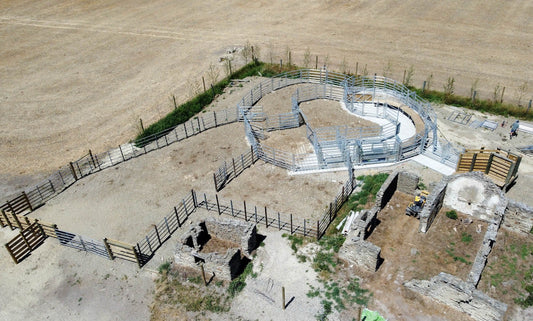
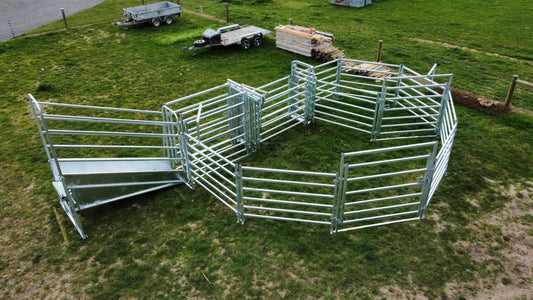
Here's an opinion most people in this industry won't say out loud: DIY cattle yard installation isn't for everyone, and pretending otherwise does farmers a real disservice.
That's not a knock on your capability. Kiwi farmers are some of the most resourceful, practically-minded people going, and if you've spent any time on a farm, you've probably fixed, built, or bodged something that a city-based engineer would say couldn't be done. But cattle yards aren't a fence repair or a trough replacement. Get them wrong and you're not just looking at a costly rebuild. You're looking at injured stock, injured people, and a setup that works against you every single time you bring a mob in.
So let's have the honest conversation. What does DIY actually look like? What does professional installation get you? And is there a smarter middle path that most people aren't talking about?
The real case for going DIY
There's a reason the DIY argument is compelling. Cost is the obvious one. Labour charges from a qualified contractor can add significantly to your total project spend, and for a farmer on a tighter budget or a lifestyle block that doesn't run high stock numbers, every dollar counts.
There's also the control factor. When you're managing a project yourself, you set the timeline. You're not waiting on a contractor's schedule, chasing a call back, or trying to coordinate delivery around someone else's availability. That matters when you've got a stock truck arriving in three weeks.
And, for farmers with a solid background in steel fabrication or construction, some elements of a yard install genuinely are within reach. Groundwork prep, for instance. Compacting the pad, levelling the surface, getting your ground conditions sorted before the steel arrives. That's work a capable, hands-on farmer can do well, and doing it yourself can meaningfully reduce your total cost.
At Onefarm, every yard we sell comes with detailed assembly plans. They're thorough, they're practical, and they're designed so that a farmer who wants to be closely involved in the build can follow them. We also maintain a list of accredited yard builders who know our systems inside and out. So the DIY-versus-professional question isn't actually binary for our customers.
Where DIY gets genuinely risky
Here's where we need to be straight with you.
Cattle yards that aren't installed correctly don't just underperform. They fail in ways that can seriously hurt people and stock. A rail that isn't properly secured, a gate that swings when it shouldn't, a forcing pen with a gap at the wrong height. These aren't aesthetic problems. They're hazards.
Cattle handling is already one of the higher-risk activities on a New Zealand farm. Animals that are stressed or confused become unpredictable. The whole point of a well-designed yard is to reduce that stress and move animals calmly and predictably. If your installation has compromised the structural integrity of the system, or if the layout creates a dead end where an animal can feel trapped, you've built a problem, not a yard.
There's also the question of post-installation. Getting posts set correctly, at the right depth, in the right ground conditions for your specific site, is one of the most consequential parts of the whole job. Too shallow and you'll feel it the first time a 500kg animal leans into the rail. Too close together or too far apart and you've affected the whole geometry of the system.
Soil type matters too. What works in free-draining Canterbury gravel is different from what you need in heavy Waikato clay. These are the kinds of variables an experienced installer has seen dozens of times. It's the kind of judgement that's genuinely hard to replicate from a YouTube video.
What professional installation actually costs you
Here's a question worth sitting with: are you comparing the right numbers?
Most farmers who do a cost comparison between DIY and professional installation look at upfront labour costs. That's a fair starting point. But it's not the whole picture.
Factor in your own time. A full cattle yard installation, done properly, is not a weekend job. If you're doing groundwork, setting posts, assembling rails, and fine-tuning gate alignment yourself, you're looking at several days of focused work at a minimum. What's your time worth? What aren't you doing while you're building yards?
Factor in mistakes. A post set at the wrong angle or depth may not reveal itself as a problem until a year down the track when the rail starts to lean. By then you're looking at a partial reinstall, which costs more than getting it right the first time.
And factor in the freight variable. Rural freight in New Zealand adds cost regardless of who's doing the install. It's a real consideration, particularly if you're further from our Hamilton or Christchurch hubs. A professional installer who knows how to sequence delivery and installation efficiently can actually reduce wasted time and double-handling on your site.
The hybrid approach: what most farmers aren't doing but probably should
This is the conversation we think is most underserved in the industry.
You don't have to choose between full DIY and handing everything to a contractor. There's a genuinely practical middle ground that gets you the best of both.
Do the groundwork yourself. Prep the pad, sort your drainage, compact the base. This is where your time and energy have real leverage, and it's the part of the job that requires less specialised knowledge about steel and stock handling geometry.
Then bring in an accredited installer for the structural elements. Post-installation, rail assembly, gate alignment. The parts where getting it wrong has real consequences.
This approach keeps your costs manageable without putting you in a position where you're making structural decisions on the fly in a paddock. It's also a better use of an installer's time, which can reduce their total charge.
For farmers on lifestyle blocks or smaller grazing blocks running our MAXXUS range, this hybrid model is often the sweet spot. You're not running a commercial operation that justifies a full professional build, but you're also not taking on risk you don't need to take on.
So what's our actual opinion?
We think DIY installation is a legitimate option for farmers who have relevant construction experience, solid site conditions, and the time to do it properly. Our assembly documentation is detailed for exactly this reason. We want farmers who want to be hands-on to have everything they need.
But we'd be doing you a disservice if we didn't say clearly: if you're new to steel construction, working with challenging ground conditions, or building a larger commercial yard, professional installation is worth the investment. The yards themselves are built to last. The installation needs to match.
The goal is a yard that works quietly and reliably every time you use it, not one you're making mental notes about every time a beast leans on a rail.
If you're weighing up your options and want to talk through what makes sense for your setup, flick us a message. There's a Kiwi on the other end who'll give you a straight answer.