The moment your animals refuse to load is the moment you realise you should have sorted this earlier. It doesn't matter if you've got four cattle, a dozen sheep, or a handful of alpacas.
The day you need to move them, for a vet visit, a sale, or an emergency, the equipment you have (or don't have) is going to define how that day goes. And if you're relying on a makeshift bank, a borrowed trailer with a dodgy ramp, or sheer luck, the odds aren't in your favour.
So: do you actually need a loading ramp on a small farm or lifestyle block? Let's get into it.
The "I've Only Got a Few Animals" Trap
There's a common line of thinking among lifestyle block owners and small farm operators that goes something like this: "I don't have enough stock to justify a proper ramp. That's for the big guys."
It's understandable. When you're running a small operation, every dollar matters. You're already juggling fencing, water systems, feed costs, and vet bills. A loading ramp can feel like one more expense you can push down the list.
But here's the problem with that logic: the number of animals you have doesn't reduce the risk of a bad loading situation. It just means you have fewer animals to absorb the cost when something goes wrong.
One injured cow. One panicked sheep that bolts. One handler who takes a knock because there was no safe way to guide the animal up into a trailer. These aren't hypothetical worst cases. They're what happens when loading is improvised.
And on a small farm, where every animal often represents a meaningful portion of your income or your investment, the stakes are actually higher, not lower.
What Can Actually Go Wrong Without One
Let's be practical about this.
Without a proper loading ramp, your options for getting an animal into a trailer or truck are limited. You're relying on natural terrain features, improvised structures, or muscle and determination. None of those are reliable or safe.
Animals are perceptive. They pick up on instability underfoot, on steep angles that feel unnatural, on gaps and movement that suggest danger. Cattle that balk at loading aren't being difficult. They're responding rationally to a situation that feels unsafe. And when a 400-kilogram animal decides it's not going, the situation escalates fast.
The risks fall into three categories:
Animal injury. A slip, a fall, a twisted leg. Beyond the immediate animal welfare concern, vet costs for livestock injuries add up quickly, and in serious cases you're looking at a write-off.
Handler injury. Loading time is consistently one of the highest-risk activities on any farm, commercial or small-scale. The combination of stressed animals, confined spaces, and improvised equipment is a reliable recipe for someone getting hurt.
Operational failure. The truck is booked. The sale is scheduled. The vet visit can't wait. And your animals won't load. That's not just a frustrating morning. It's missed income, rescheduling costs, and a problem that hasn't actually been solved.
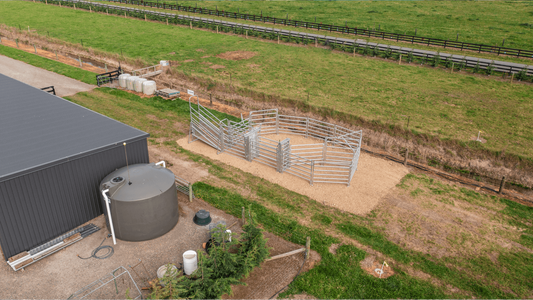
A proper loading ramp removes most of these variables. It gives your animals a consistent, stable surface at the right angle. It gives you control over the situation. It gives handlers a safe position to work from. It turns a potentially dangerous and chaotic event into a managed process.
Portable vs. Permanent: What Makes Sense for Small Operations
One of the genuine barriers for lifestyle block owners is the assumption that a loading ramp means a fixed, permanent structure. Something bolted into the ground that can’t be moved and requires significant installation.
That's not the full picture.
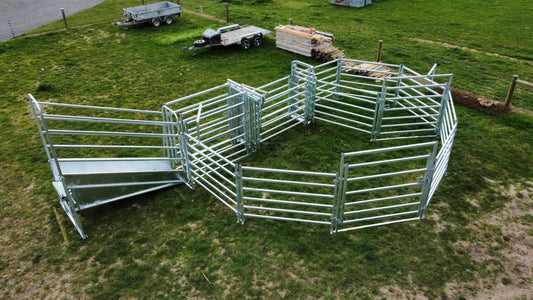
For smaller operations, a portable loading ramp is often the better fit. You can position it where you need it and adjust your setup as your operation changes. This matters on properties where the layout isn't purpose-built for livestock handling.
The key things to look for in a portable ramp are stability under load, an appropriate angle for the animals you're working with, non-slip surfaces, and solid construction that won't flex or shift during use. Cheap options exist, but a ramp that moves, bends, or makes noise when an animal steps on it will make loading harder, not easier.
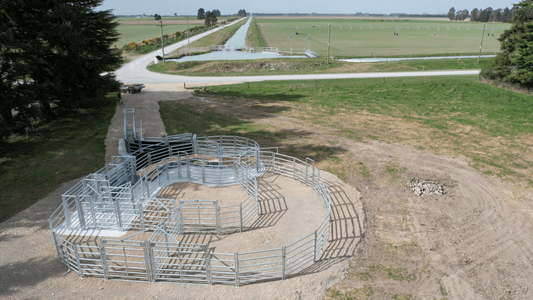
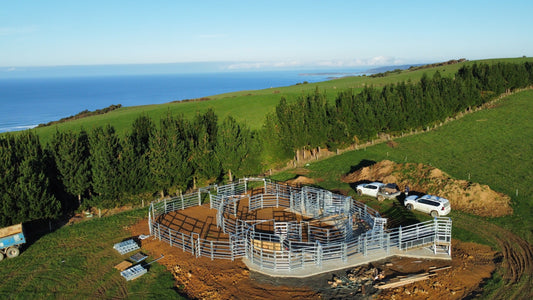
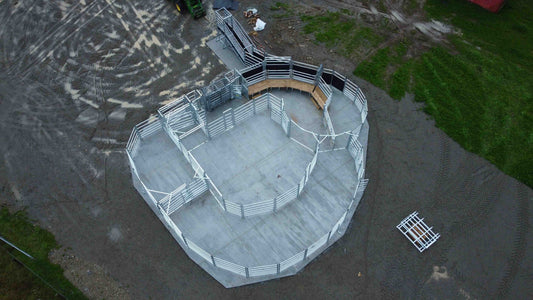
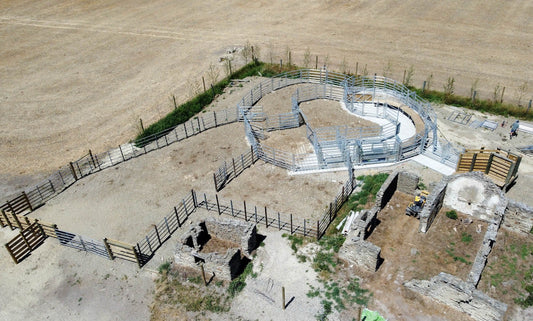
If your operation is growing, or if you've already got a yard setup in place, a fixed ramp that integrates with your yards will generally give you better results long-term. The workflow is smoother, the safety margins are higher, and you're not setting up and packing down equipment every time you need to move stock.
For a lot of small farm owners, the honest answer is that you start with portable and build toward permanent as your setup matures. Either way, something purpose-built beats improvised every time.
It's Not Just Cattle
Worth saying clearly: loading ramps aren't only for cattle operations.
Lifestyle blocks in New Zealand often run mixed livestock. Sheep, goats, pigs, alpacas, even deer in some cases. The loading challenges are different for each species, but the core need is the same. You need a way to safely get animals up into a trailer or truck without risking injury to them or to you.
Alpacas, for example, are increasingly popular on lifestyle blocks. They're not large animals, but they're flight-risk animals. A loading process that feels unstable or threatening will result in a panicked animal that's genuinely difficult to handle. The same principle applies to goats. Small doesn't mean easy.
If your ramp setup only works for one type of animal, it's worth thinking about whether a more versatile solution makes sense. Especially if your stock mix changes over time, which it often does.
The Resale and Shared-Use Angle Worth Considering
Here's something most people don't think about when evaluating whether a ramp is worth it: the value doesn't have to sit entirely on your property.
In areas where lifestyle blocks are clustered, a good loading ramp is a piece of infrastructure that neighbours are often happy to share arrangements around. If the cost is a barrier, it's worth having a conversation with the farm next door. Shared ownership or a cost-split arrangement is genuinely common, and it makes the investment easier to justify on both sides.
And from a resale perspective, a property with proper livestock handling infrastructure is more attractive to buyers than one without. You're not just buying convenience for yourself. You're adding practical value to the block.
The Honest Bottom Line
You don't need to be running a hundred-head commercial operation to justify a loading ramp. If you have livestock, you will need to move them at some point. That is not a question of if but when.
The ramp isn't about scale. It's about having the right equipment for the task so that when that day comes, the process is safe, controlled, and as straightforward as it can be.
Small farm, lifestyle block, mixed livestock. It doesn't matter. The argument for having a proper loading solution is the same across all of them: animals get stressed, improvised loading is dangerous, and the cost of something going wrong is almost always higher than the cost of the equipment that would have prevented it.
If you're not sure what setup suits your property and your stock, flick us a message. We work with operations of every size, from seven-acre lifestyle blocks to large commercial farms, and we're happy to talk through what actually makes sense for your situation. No upsell, just practical advice from people who know what they're talking about.