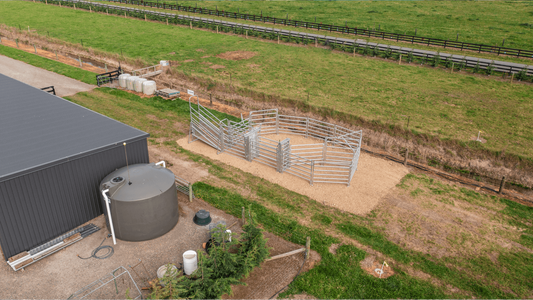
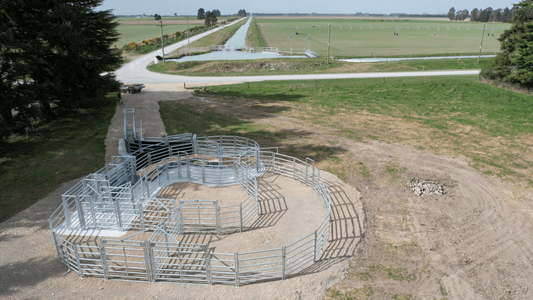
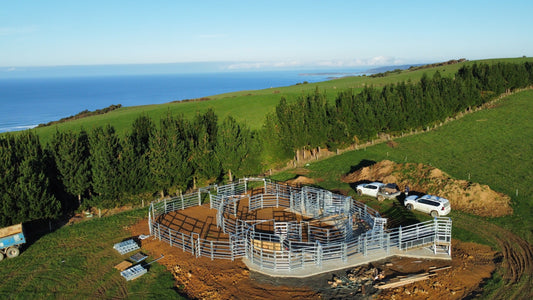
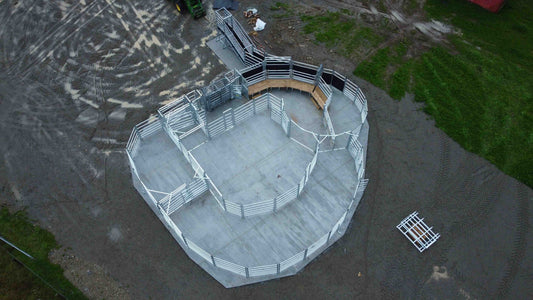
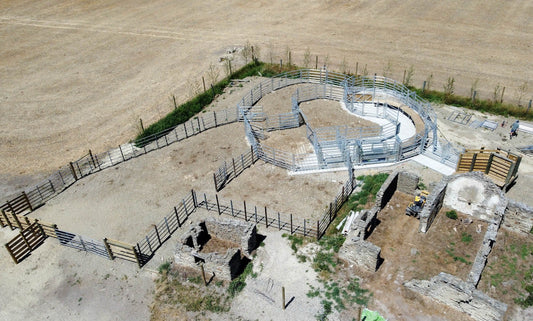
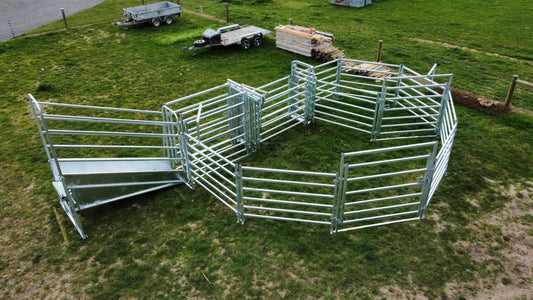
Cattle yard property value in New Zealand is one of those topics that rarely comes up at the farm gate but lands hard at settlement. A rural property buyer's attention isn't just drawn to the land. The yards are one of the first things they clock when they drive in, and what they see shapes the number they put on paper before they've even looked at the paddocks.
That might feel unfair. You've spent thirty years building the soil, managing the genetics, and caring for the land. But a buyer walking a property for the first time doesn't see three decades of effort. They see what's in front of them. And if what's in front of them is rust, a broken rail, and a latch held together with number eight wire, they're already doing the maths on what it'll cost to fix it.
This post is an opinion piece, and here's ours: the condition of your Cattle Yards is one of the few variables you can actually control before listing. That's either a problem or an opportunity, depending on what you do with it.
What Buyers Are Actually Looking For
Anyone who has bought and sold rural property in New Zealand will tell you that experienced buyers and their advisors have a checklist in their heads. Infrastructure is near the top of it.
Cattle Yards get scrutinised for several reasons. First, there's the replacement cost question. A buyer standing in front of deteriorating yards isn't thinking about what those yards were worth. They're thinking about what it'll cost to replace or remediate them, and that figure gets deducted from the offer almost automatically. Second, there's the management signal. Yards that are well-maintained tell a buyer something about how the whole property has been looked after. Neglected yards plant a seed of doubt that's hard to uproot, no matter how good the rest of the inspection goes.
This is the quiet cost that most sellers don't account for. It's not always that a buyer refuses to purchase because of the yards. It's that they discount the price, feel justified doing so, and the seller has very little ground to argue from.
The Replacement Cost Logic Works Against You
Here's something worth sitting with. Modern, commercial-grade steel Cattle Yards in New Zealand represent a meaningful capital investment. A buyer who would otherwise offer at or near your asking price can point to substandard yards and credibly argue for a reduction that far outweighs what it would actually cost you to address the issues before listing.
In other words, a few thousand dollars of targeted work before sale can prevent tens of thousands coming off the final price at negotiation. That's not a guarantee, and every property is different. But the logic is sound, and we've heard it echoed by farmers who've been on both sides of the table.
The maths get worse when you factor in financing. A buyer with a lender looking over their shoulder needs the property to stack up on paper. Infrastructure deficiencies, including yards in poor condition, can affect how a lender views the asset. A property that might otherwise qualify for a certain loan-to-value ratio can become a harder conversation when the buyer has to disclose material remediation costs.
When Yards Actually Add Value
Not every scenario is about damage control. Good Cattle Yards, properly set up and well-maintained, are a genuine positive at inspection time.
A set of yards that's clearly been thought through, with decent flow from the forcing pen through the race to a solid loading ramp, signals something specific to a buyer who knows stock handling. It tells them the person who ran this place understood what they were doing. There's a respect factor in that, and it's real.
For buyers looking at a property with an eye to scaling up or running larger numbers, an existing yard setup they don't need to rebuild is a meaningful time- and money-saver. They'll factor that in. A well-configured set of yards shortens the time between settlement and having the property operational for their needs.
Presentation matters too. A yard that's clean, structurally sound, and clearly maintained doesn't need to be brand new. It needs to look like someone cared. Gates that swing properly. Rails that are galvanised and intact. A loading ramp that doesn't make a buyer wince when they walk it. These aren't luxury considerations. They're the baseline for what a competent buyer expects to find on a well-run property.
The Non-Structural Stuff Matters More Than You Think
Most of the conversation around cattle yard condition focuses on structural integrity, and rightly so. But there's a layer of presentation that sits below structural and still carries real weight with buyers.
Vegetation growing through the panels. Old dosing equipment left in the race. Gates chained in the open position because the hinges have given up. Mud and compaction in the forcing area from the last time the yards were used. None of these are structural failures, but all of them tell a story a seller doesn't want a buyer reading.
Before listing, walk through your yards with a buyer's eyes. Better yet, take someone with you who'll be honest. Ask them what they see first. Ask them what concern it raises. You may be surprised what a fresh set of eyes picks up that you've stopped noticing.
A few hours of work, clearing, repainting where needed, fixing the obvious small things, can shift a buyer's first impression meaningfully. First impressions are largely emotional, and that emotion carries into the offer.
A Considered Opinion on Where to Spend Your Pre-Sale Dollar
If you're planning to list a farming property in the next twelve to eighteen months and your yards are looking tired, here's our honest take on where to focus.
Start with structural integrity. Any broken or badly corroded rails, gates that don't function, or damaged race work needs to be addressed. A buyer's advisor will pick these up immediately, and they become leverage points in negotiation.
Next, look at the loading ramp. If your ramp is compromised, repair or replace it. A well-built ramp, with proper footing and a safe approach, is something buyers notice in a positive way. It's also a safety and liability consideration they weigh up.
After that, look at flow and layout. You may not be able to reconfigure your yards completely before the sale, but if there's a simple fix that improves how the setup reads, it's worth considering. A yard that a buyer can intuitively understand and walk through is easier to fall in love with than one that requires explanation.
Finally, don't overlook the cosmetic layer. Pressure wash where you can. Remove anything that isn't part of the yard's function. Make it look like the property it actually is.
The Bottom Line
Cattle yard property value in NZ doesn't get enough airtime in the pre-sale conversation, and that's a real gap. Sellers spend time and money on a lot of things before listing. The yards often get left to look after themselves, on the assumption that buyers will see past condition to potential.
Some do. Most don't.
Your yards are one of the first things a buyer sees and one of the few things you can genuinely influence before you go to market. That's a meaningful amount of control in a process that can otherwise feel entirely out of your hands.
If you're not sure where your yards sit, or what it would take to get them to a standard that helps rather than hurts your sale, we're happy to talk it through. Flick us a message or call us on 0800 ONEFARM. There's always a Kiwi on the other end.