Your pasture is your bank account. Overstock it, and you spend faster than it can earn back. Get the balance right, and a small block can run productively for years without chewing itself to bare dirt.
It's one of the most common questions from lifestyle block owners across New Zealand, and it rarely gets a straight answer. Everyone quotes the old rule of thumb: one cow per hectare, as if that settles it. It doesn't. That figure was never meant to be a universal truth. It was a starting point, and a rough one at that.
What actually determines how many cattle your land can carry is a combination of your soil type, rainfall, breed, pasture management, and what you're genuinely trying to achieve on the block. This guide walks through all of it in plain terms so you can make a realistic call for your own situation.
Why "One Cow per Hectare" Only Gets You So Far
The one-per-hectare rule exists because it's memorable and broadly safe. In a wet, fertile region with well-managed pasture, you might comfortably run more. In a dry summer on thin, free-draining soils, even one cow per hectare could be pushing it.
New Zealand is not one climate. A block in Northland with 1,800mm of annual rainfall and heavy clay loam sits in a completely different world from a Canterbury property on river flats through a dry summer. Yet most general advice out there doesn't make this distinction, and that's a real problem. Stocking decisions that work in Waikato can strip a Marlborough block bare by February.
The honest answer is that carrying capacity is a calculation, not a fixed number. And the inputs to that calculation vary considerably from region to region and farm to farm.
The Factors That Actually Set Your Carrying Capacity
Rainfall and Season Length
Pasture growth is almost entirely driven by moisture and temperature. In high-rainfall regions like Northland, Waikato, and parts of the West Coast, grass grows for a longer portion of the year, which supports higher stocking rates. Canterbury, Hawke's Bay, and Central Otago all have pronounced dry seasons that sharply reduce summer pasture growth. In those regions, you need to plan for what the land can carry in its leanest months, not its best.
A practical way to think about it: your stocking rate is only as high as your worst season allows, unless you're supplementing with hay or silage to bridge the gap.
Soil Type and Drainage
Well-structured soils with good drainage recover faster from grazing pressure. Heavy clay soils, particularly in winter, can be damaged quickly by cattle hooves if animals are left on wet ground too long. Compaction reduces pasture productivity for seasons afterwards. On a small block, you often can't afford to sacrifice a paddock to winter pugging and just rotate away from it, because you simply don't have the room.
Lighter soils are more drought-prone but generally tolerate rotational grazing well. Getting a basic soil test done before you decide on stocking numbers is worth the small cost.
Breed and Body Weight
Not all cattle are equal in terms of what they demand from a paddock. A 600kg Friesian-cross cow eats significantly more than a 380kg Angus heifer. When agronomists talk about stocking rates, they often use a standard unit called a livestock unit to account for these differences. Larger, heavier breeds require more pasture per head, so a lifestyle block running bigger breeds needs to adjust its stocking rate down accordingly.
For lifestyle blocks, smaller-framed beef breeds like Angus, Hereford, or their crosses tend to be a more forgiving fit. They're easier on the land, easier to handle, and their feed requirements are more proportionate to what a small block can realistically provide.
What You're Trying to Achieve
This is the factor most general advice skips entirely. A commercial farmer is optimising for production output per hectare. A lifestyle block owner is often balancing something different: keeping a small number of animals productively, maintaining the look and feel of the land, and not turning a weekend property into a full-time job.
That hybrid goal changes the equation. Running two or three Angus steers for finishing on a 3-hectare block with good pasture cover is a very different proposition to trying to run a breeding herd on the same land. Being clear about what you actually want makes stocking decisions much easier to call.
Rough Numbers by Region: A Starting Point
These are broad estimates only. They assume well-maintained pasture, rotational grazing, and average seasonal conditions for each region. Individual blocks will vary.
Northland and Waikato: 1.0 to 1.5 adult cattle per hectare is achievable in good seasons with good pasture management. Wet winters require care around pugging damage.
Bay of Plenty and Gisborne: Similar to Waikato, though summer dry spells in Gisborne can tighten things up. Around 1.0 to 1.2 per hectare is a conservative starting point.
Hawke's Bay and Manawatu: Summer drought risk is real in Hawke's Bay. Plan for 0.8 to 1.0 per hectare and have a supplementary feed plan ready for January and February.
Nelson and Marlborough: Dry summers mean carrying capacity drops significantly mid-year. 0.6 to 0.8 per hectare is realistic without irrigation or supplementary feed.
Canterbury: River flat properties with irrigation can support more, but dryland blocks should plan for 0.6 to 0.8 per hectare year-round, with close attention to summer pasture cover.
Southland and Otago: Good rainfall in Southland supports higher rates, around 1.0 to 1.2. Inland Central Otago is another story and requires careful planning around both summer dry and cold winters.
Again, these are a framework, not a guarantee. Your specific block, soil health, and pasture quality will shift these numbers up or down.
Why Rotational Grazing Changes the Maths
This is the part that most first-time lifestyle block owners underestimate. Set stocking, which means leaving cattle on a paddock continuously, will consistently underperform a simple rotational system on a small block.
When you rotate cattle through two or more paddocks, you give each paddock a rest period. Grass that has been grazed down needs time to recover. Rest it properly, and it comes back more productive. Graze it again before it has recovered, and you gradually weaken the pasture, let weeds establish, and reduce the amount of feed your land can actually produce.
Even a basic two-paddock rotation on a 4-hectare block can lift effective carrying capacity by 20 to 30 percent compared to continuous grazing. The cattle perform better too, because they're moving onto fresh feed rather than chasing off short, stressed grass.
If you're planning a small block setup and haven't thought about fencing for rotation, it's worth factoring that in before you decide on numbers.
A Few Things Worth Checking Before You Stock Up
Water supply
Cattle drink a lot. A 500kg animal can consume 50 to 70 litres a day in warm weather. Make sure your water source can handle your planned herd size, including in dry summers when springs and streams may slow to a trickle.
Council rules and resource consents
Some regions have rules around minimum land size, stock density near waterways, and effluent management. It's worth a quick check with your regional council before you commit to a stocking plan, particularly if your block is near a stream or in a high-rainfall catchment area.
Fencing condition
Cattle will test fences. Before you bring animals on, walk your boundary and internal fences properly. Escapes are stressful, expensive, and sometimes dangerous. A bit of fencing work upfront saves a lot of grief later.
Your handling setup
At some point, you will need to work your cattle individually, whether for drenching, pregnancy testing, or moving them for sale or slaughter. Having even a basic set of yards and a crush makes that job safer and less chaotic. It's one of those things lifestyle block owners often leave too late.
Getting Your Yards Sorted Before You Need Them
A lot of lifestyle block owners bring on cattle before they have their handling setup in place, and then spend the next twelve months regretting it. Getting cattle into a corner of a paddock and trying to drench them by hand is not a good time for anyone involved.
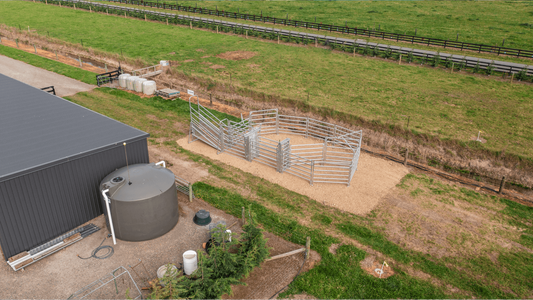
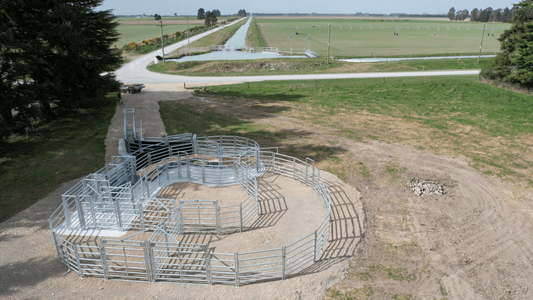
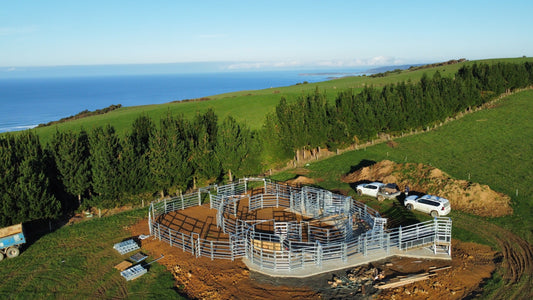
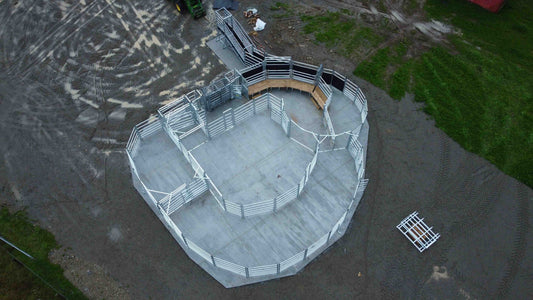
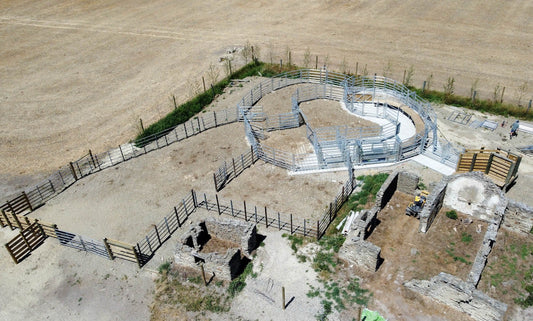
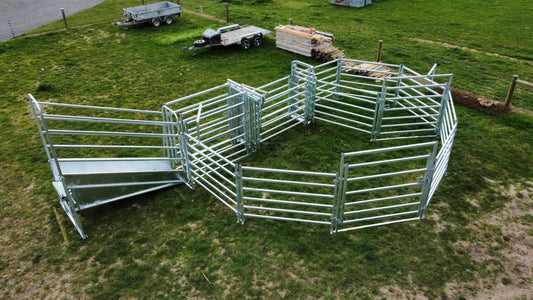
A properly sized yard and cattle crush doesn't have to be a big commercial setup. Onefarm's MAXXUS range is built specifically for lifestyle blocks and smaller operations, with the 6-head and 12-head yards covering most of what a small block needs. They're sized right for the job, built from hot-dipped galvanised steel, and designed to handle cattle safely without requiring a full-time farm crew to operate.
The Summary
So, how many cattle per hectare can NZ lifestyle blocks can realistically support? Somewhere between 0.6 and 1.5 per hectare, depending on where you are, what breed you're running, how your pasture is managed, and what season you're in.
The one-per-hectare rule isn't wrong. It's just incomplete. Use it as a starting point, apply it to your actual region and soil type, and build in a buffer for your worst season rather than your best. Your land will tell you if you've got it right. Bare patches, weedy paddocks, and cattle losing condition are the signs you've pushed past what your block can carry.
Get the stocking rate right and a small block can be genuinely productive and genuinely enjoyable. That's worth taking the time to calculate properly.