Most lifestyle block owners build their cattle yards too small. Not by a little. By a lot. And they usually don't find out until they're trying to draft three steers in a yard that barely fits one, wondering why the whole thing feels like a wrestling match.
If you're planning a yard for a lifestyle block, this post is for you. We'll cover the real numbers, the common mistakes, and what actually matters when you're working with a small herd and limited space.
You Don't Need a Commercial Feedlot. But You Need More Than You Think.
There's a version of this conversation where someone tells you that a cattle yard for five head only needs to be the size of a large garden shed. That's not quite right. Yes, you're not processing 200 head of beef cattle. But the amount of space a yard needs isn't just about how many animals you're holding. It's about whether you can actually work safely in it.
A yard that's too cramped creates problems on multiple fronts. The cattle get stressed because they can't move naturally. You get stressed because you're squeezed into tight spaces with animals that can weigh 500 kilograms. And the whole handling process takes three times longer than it should.
The lifestyle block dream is real. The ability to raise a small mob, work with your own animals, manage your own land. But that dream runs into a wall fast if your infrastructure doesn't support it.
The Number Most People Ignore
When people plan a lifestyle block yard, they tend to think about how many cattle they currently have. That's the wrong starting point.
The right question is: how many cattle could I realistically have in three years?
A lifestyle block that starts with three weaners often turns into a property with six or eight animals once you've got the confidence and the pasture to support it. If your yard is sized for three, you'll be rebuilding it before you know it. That's a real cost, not a hypothetical one.
Plan for growth. It doesn't mean you have to build the whole thing now. But it does mean you should design with expansion in mind from day one.
So What Are the Actual Space Requirements?
Here's where we get into the practical detail.
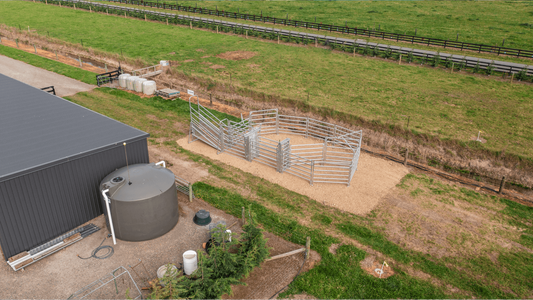
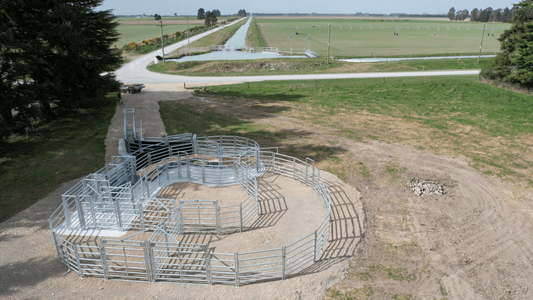
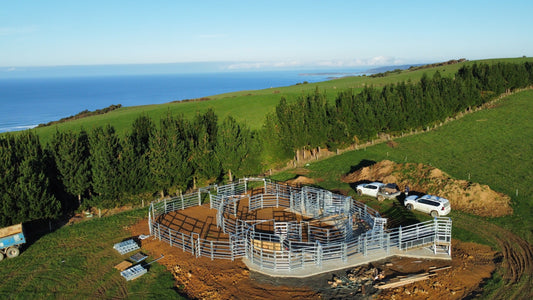
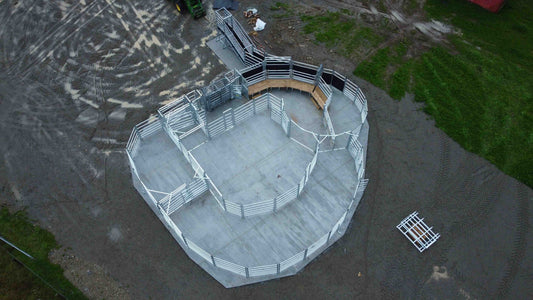
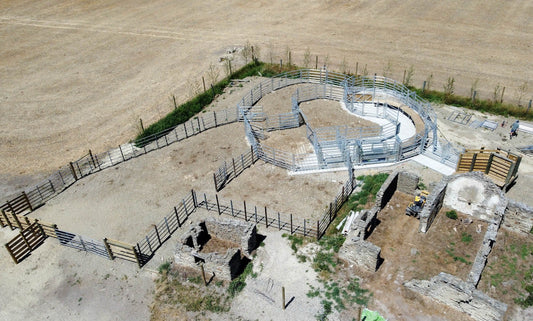
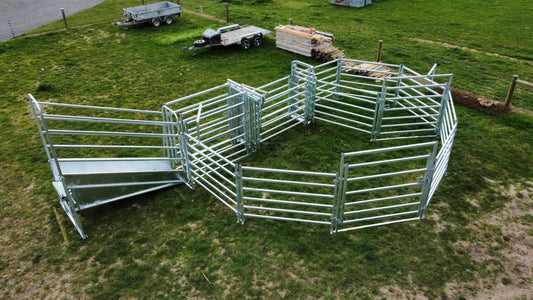
For a small lifestyle block herd, you're typically looking at a core setup that includes a forcing pen, a race, and a crush. That's the minimum functional configuration. Everything else is useful, but those three elements are what let you actually handle cattle safely.
For a herd of up to 10 head, a rough guide would be:
The forcing pen needs to hold your full mob with enough room for the animals to turn and for you to move around the outside safely. For 10 cattle, that means a pen of at least 20 to 25 square metres, depending on your breed and the average weight of your animals.
The race connects the forcing pen to the crush. It should be long enough to hold at least three or four animals in a line. That gives you flow through the system rather than constantly having to reload from the forcing pen. A standard race for a small setup is typically 6 to 9 metres long.
The crush itself is a fixed point, but you'll want enough clearance around it for you to work without getting pinned. At least a metre on each working side.
Add in access lanes, a loading ramp if you need one, and some room around the whole structure for vehicle access, and you're looking at a footprint of roughly 100 to 150 square metres for a properly functional small yard. Some setups are smaller, some larger, but that's a realistic working range for a lifestyle block doing the job properly.
The Safety Argument Is the Most Important One
This isn't just about convenience or workflow. It's about not getting hurt.
Cattle handling is one of the higher-risk activities on a lifestyle block. A yard that's too tight, poorly laid out, or undersized puts you in situations where you're sharing space with a stressed animal and there's nowhere to go. That's how people end up against a fence rail with a tonne of beef between them and the gate.
Good yard design gives you escape routes. It lets you stay on the outside of pens while you work. It means cattle move forward through the system rather than spinning, backing up, or deciding they'd rather go through you than through the gate.
Space isn't a luxury in yard design. It's what makes the whole thing safe to use.
Compact Doesn't Mean Cheap
One thing worth saying clearly: a smaller yard doesn't automatically mean a drastically cheaper build. The groundwork, drainage, and foundation preparation costs are largely fixed regardless of how many panels you're putting up. If you're going to spend money on site prep, it's worth getting the dimensions right so you're not redoing it.
This is where lifestyle block owners sometimes come unstuck. They focus on the panel count, price it out, and think they're being efficient. But if the site prep isn't right, or if the drainage is poor, the yard will give you problems no matter how good the steel is.
Get the footprint right. Get the ground right. Then get the panels.
What About Council Rules and Compliance?
This is a genuine area where vague advice causes real problems. Rules vary significantly depending on your region, your zoning, and the proximity of your yard to property boundaries, waterways, and neighbouring properties.
As a general principle, most councils in New Zealand will want to know about infrastructure that could affect drainage or generate noise. A permanent cattle yard with a concrete or compacted base is the kind of thing that can require a building consent or resource consent depending on local district plan rules.
The honest answer is: check with your local council before you commit to a location on your block. Find out whether there are setback requirements from boundaries or waterways. Ask about noise and effluent management. It's not the exciting part of the planning process, but getting it wrong is significantly more expensive than getting it right.
Designing for a Small Mob, Not a Big Farm
One of the most common frustrations we hear from lifestyle block owners is that most yard design advice assumes a commercial-scale operation. The guidelines are written for farmers running 200 head, and the numbers don't scale down in a useful way.
So here's a practical opinion based on what actually works for small operations.
For a herd of 2 to 5 cattle, you can get away with a simpler setup, but don't cut the race short. A short race is one of the most common design mistakes and one of the most annoying to live with. Even with three animals, a proper race length makes handling dramatically smoother.
For 6 to 10 head, you need a functional forcing pen. Don't try to use an open paddock corner as a substitute. A proper circular or tapered forcing pen moves cattle efficiently and reduces the amount of pressure you have to put on them, which makes the whole job easier and calmer.
For anything above 10 head, you're starting to move into a configuration that warrants a more formal design conversation. Herd dynamics change, the volume of work increases, and the yard needs to be able to handle that load reliably.
Modular Builds Make More Sense Than You'd Think
If budget is a genuine constraint, consider a phased approach. Build the core handling system now. Size the footprint for what you'll need in three to five years, but start with the panels that get you functional today.
Modular steel yard systems are well suited to this kind of approach because the panels can be reconfigured or added to without having to start from scratch. You're not locked into the initial layout forever.
This is genuinely a smarter way to approach infrastructure on a lifestyle block. You're not guessing at your future needs and then committing your entire budget to that guess. You're building something solid that can grow with you.
Getting It Right the First Time
The lifestyle block cattle yard that works well is one that was planned with the right footprint, designed for the way cattle actually move, and built on a site that can handle the load and the drainage demands.
The one that doesn't work is usually the one that was squeezed into a corner, sized for the current herd, and built before anyone checked whether the ground drains properly.
You don't have to build big. But you do have to build right.
If you're at the planning stage and want to talk through what a setup would look like for your specific block, flick us a message. There'll be a real person on the other end who knows cattle yards, not a contact form that disappears into the void.
Get the space right, and everything else follows.