Most cattle yards are a nightmare for sheep. The rail spacing is wrong, the gates are too wide, the forcing pen moves cattle fine but bunches sheep into a stressed, packed mess. If you're running a mixed operation and you've tried to push a mob of ewes through a cattle yard, you already know this.
The good news is that with the right decisions at the design stage, a cattle yard sheep setup can work genuinely well for both species. Not "well enough." Actually well.
This post walks through what to look for, what to change, and what to ask before you spend a dollar.
Why Most Cattle Yards Fail at Sheep Handling
Cattle and sheep move differently. That sounds obvious, but the implications run deeper than most farmers realise when they're spec'ing a yard.
Cattle follow the animal in front. They tolerate low-light areas, prefer curved races, and respond well to gentle pressure applied from behind. Sheep are more reactive, more prone to scattering, and far more responsive to light. They'll baulk at shadows, gaps, and sudden changes in footing underfoot. They also need less space per animal but more control over the direction they move.
A standard cattle rail spacing of 200 to 250mm between rails is fine for a 500kg Hereford. A lamb will walk straight through it.
Gate widths designed for a bull become a funnel problem when you're drafting a mixed-age flock. Forcing pens built for 20 head of cattle become an overcrowding hazard when you fill them with 100 sheep.
None of this means you need two sets of yards. It means you need to think at the design stage rather than retrofitting problems later.
The Key Specs to Nail Before You Buy
Rail spacing and infill options
This is the most practical issue for a cattle yard sheep setup. A yard designed purely for cattle will have rail spacings that sheep, and especially lambs, can escape through or get caught in.
When you're looking at yards, ask specifically whether the panels can be configured with closer rail spacing, or whether infill options like mesh inserts are available. Some yards are modular enough that you can use cattle-spec panels in the larger holding pens and switch to closer-spaced infill for the drafting and race sections where sheep control matters most.
The goal is to stop sheep getting through gaps, not to rebuild the whole yard around them.
Gate widths
Standard cattle gates are typically designed around the width of a mature animal in a race. That's fine for cattle. For sheep, wide gates create flow problems, particularly in forcing pens and drafting areas where you want animals moving in a single file with no options to double back.
Look for yards that offer narrower gate configurations, or ask whether standard gates can be paired with drop-in infill panels to reduce the effective width.
Forcing pen design
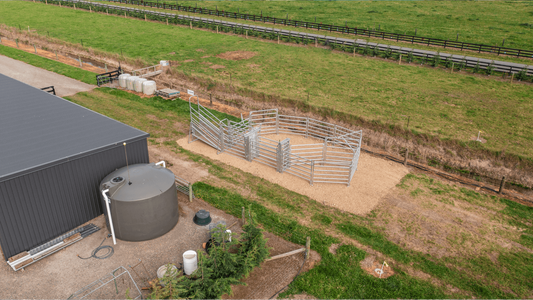
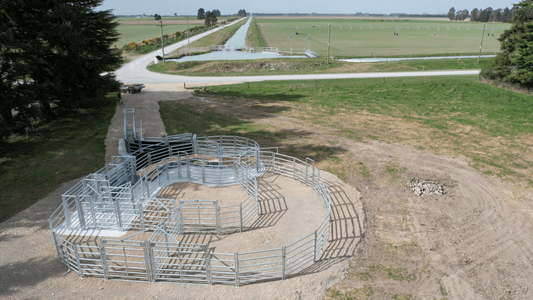
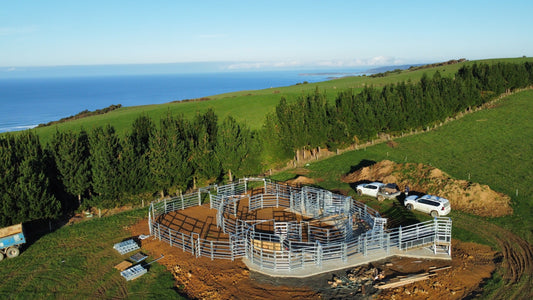
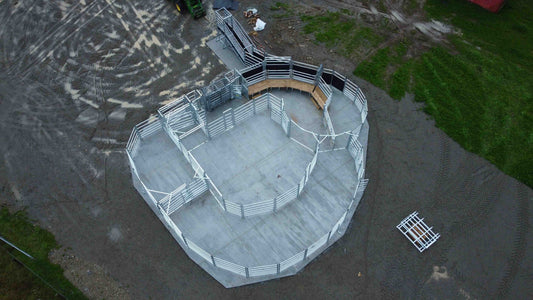
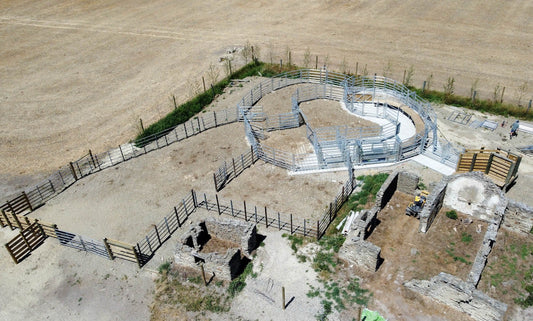
A circular forcing pen is one of the smartest things you can put in any yard, and it's worth understanding why it works so well for both species.
The circular design removes corners. Sheep are prone to packing into corners under pressure and the ones at the bottom of that pack can go down and get injured. A circular pen keeps animals moving, reduces baulking, and lowers stress on both the flock and the person working them.
For mixed operations, this isn't just a nice feature. It's genuinely the right call.
Race width and length
Cattle races are typically wider than you need for sheep. A race that's comfortable for a large beef animal will let sheep turn around and walk back the wrong way, which is exactly the frustration you're trying to design out.
Ask about adjustable race widths, or whether the race can be fitted with a temporary width reducer for sheep days. Some farmers use portable panels for this on seasonal operations. If you're handling sheep regularly, a permanent adjustment is worth the extra cost upfront.
Flooring and footing
Sheep are more sensitive to footing than cattle. Smooth concrete that works fine for cattle can cause sheep to slip and panic, which compounds handling stress and creates injury risk.
Textured or graded concrete is a baseline requirement. If your yard includes a loading ramp, this matters even more. A timber-floored ramp is worth considering seriously for any operation handling both species. Timber gives better grip underfoot for sheep than bare steel or concrete, and it's noticeably quieter during loading, which helps reduce animal stress.
Temporary Versus Permanent Modifications
If you're running a primarily cattle operation with seasonal sheep work, you have two genuine options, and it's worth being honest with yourself about which one fits.
Temporary modifications make sense when sheep make up a small, seasonal part of your enterprise. Portable infill panels, race width reducers, and temporary mesh can be brought in for crutching, drenching, or pre-sale drafting, then removed when the cattle work resumes. This adds some handling time, but it keeps your core yard configuration clean.
Permanent dual-spec design is the better call when sheep are a meaningful part of your income or when you're building from scratch. Getting the rail spacing, gate widths, and forcing pen design right at the start costs you very little compared to what it would cost to retrofit later. It also removes the labour overhead of setting up and packing down temporary gear every time you handle sheep.
If you're at the design stage right now, build it right once.
What to Ask Your Yards Supplier
Before you commit to any yard, these are the questions worth asking directly.
Can panels be configured with closer rail spacing for sheep, or are there infill options available? What is the standard gate width, and are narrower configurations available? Does the forcing pen use a circular design? Can the race width be adjusted permanently or temporarily? What is the ramp flooring material, and how does it perform for sheep?
A supplier who knows their product will answer these without hesitation. If the answers are vague, that tells you something.
At Onefarm, we'll talk you through the specifics of any yard before you buy. Our team works with farmers running all kinds of operations, from pure cattle blocks to mixed finishing operations with regular sheep work. We'll help you figure out what configuration makes sense for your situation, not push you toward whatever's easiest to sell.
One Yard, Done Right
Building or buying a yard that handles both cattle and sheep well isn't about compromise. It's about making the right call at the design stage.
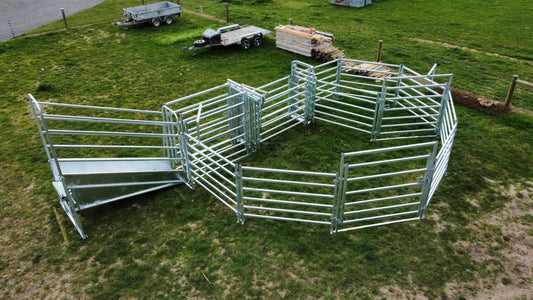
Nail the rail spacing, get the forcing pen right, think through your gate widths and race dimensions, and you'll end up with infrastructure that earns its cost every single time you use it, regardless of what species you're running through it. At Onefarm, all of our yards are designed with 7-rail panels so that you can run sheep and cattle safely and more efficiently.
If you're weighing up your options or not sure where to start, flick us a message or give us a call. There's a Kiwi on the other end who knows this stuff and is happy to talk it through.