Most farmers only redesign their yards after something goes wrong. A handler gets caught in the wrong place. Cattle pile up in a corner and won't move. The whole thing takes twice as long as it should, every single time. By then, the cost isn't just the rebuild. It's years of lost time, stressed animals, and a few near-misses that could have been avoided.
Getting your cattle yard design right from the start is one of the highest-return decisions you can make on your property. And yet, most people go into it without a clear framework for what they actually need.
This post won't tell you there's one perfect design. There isn't. But there are five questions you should be able to answer before you spend a single dollar on materials.
Your Herd Size Today Is Not Your Herd Size Forever
The most common regret we hear from farmers? They built for the herd they had, not the herd they were heading towards.
If you're running 60 cows now but you've got the land and the intention to scale to 120, design for 120. Adding holding capacity to an existing yard after the fact is expensive, disruptive, and usually means working around compromises that wouldn't have been there if you'd planned ahead.
Think about your realistic five-year trajectory. Not your wildest optimism. Your realistic plan. Then build with a little room on top of that.
Onefarm's commercial yards start at 98 head and scale from there. Our MAXXUS range suits smaller operations, including lifestyle blocks, where head counts are lower but the need for a safe, functional setup is just as real.
The Land Tells You a Lot, If You Listen to It
Cattle yards don't sit in a vacuum. They sit on your property, which has a prevailing wind direction, a sun angle, a drainage pattern, and probably a few quirks only you know about.
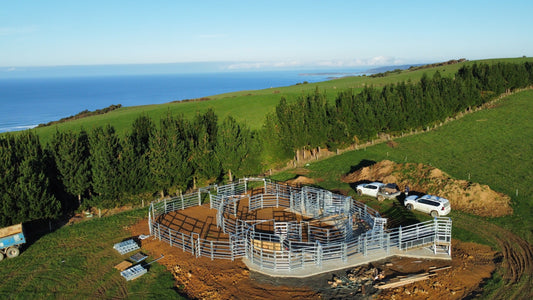
Orientation matters more than most people give it credit for. Cattle facing into a rising sun won't move well. Yards that pool water after rain become a mud problem and a biosecurity problem fast. Prevailing wind direction affects how cattle smell the yards before they arrive, which affects how calmly they'll enter.
Before you commit to a layout, spend some time standing in the space at different times of day. Watch where the sun hits in the morning. Know where water drains. Think about where your cattle are coming from when you bring them in, and how the flow of the yard will work with that approach, not against it.
Topography also drives some practical decisions. A natural slope can help with drainage. It can also create problems with gate alignment and panel stability if it's not accounted for in the design.
This is where working with someone who has laid out a lot of yards pays off. A good supplier won't just send you a panel count and a price. They'll ask about your site.
Modular or Permanent: Know What You're Committing To
This is a genuinely important decision, and the right answer depends on your situation.
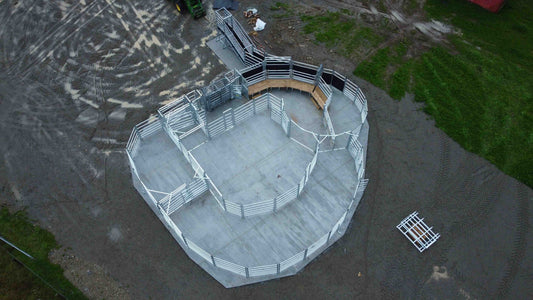
Permanent yards with concrete slabs make sense for high-frequency commercial operations. The slab gives you a stable, hygienic surface that handles heavy traffic and is easy to clean down. It's a bigger upfront investment in both materials and site preparation, but over a 20-to-30-year lifespan, the cost per use gets very low.
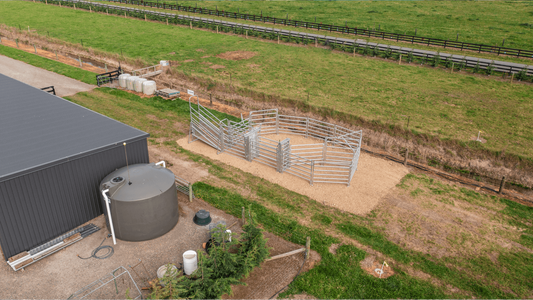
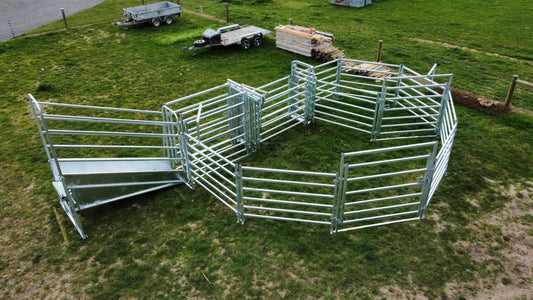
Modular yards are a different proposition. Our MAXXUS system, for example, doesn't require a concrete slab. It needs a well-compacted pad of rotten rock or metal, which is significantly easier and cheaper to prepare. For farmers who need a capable yard without a major civil works budget, or who want flexibility to reconfigure or relocate down the track, modular is worth serious consideration.
Neither option is the budget compromise of the other. They're just designed for different situations.
If you're not sure which suits your property, that's exactly the kind of conversation worth having with someone who knows both systems.
Animal Flow Is Everything in Cattle Yard Design
This is where the science comes in, and it's worth knowing.
Temple Grandin's work on cattle behaviour changed how good yards are designed. Cattle have wide-angle, panoramic vision. They're prey animals. They don't like dead ends, sudden shadows, or having to look directly at handlers. They follow each other, they respond to pressure, and they'll baulk at anything that breaks the flow or feels like a trap.
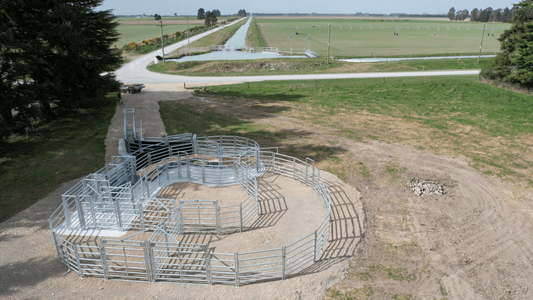
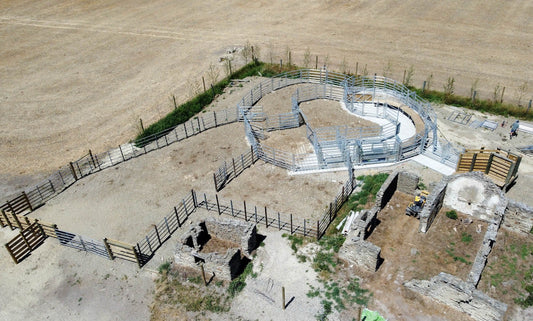
A yard designed around animal psychology handles better. Curved races outperform straight ones because cattle think they're heading somewhere open. Forcing pens shaped to guide cattle into a race work better than square corners where animals pile up and panic. Reducing the stress in the system reduces the risk to handlers and improves the experience for the animals.
When you're evaluating a design, walk through it mentally as a beast would. Where would you baulk? Where does the flow break? Where would you feel trapped? Those are the spots to fix before you build, not after.
Handler Safety Isn't a Secondary Consideration
It should probably be the first one.
Every yard design decision affects how safely a person can do their job. Escape routes, gate placement, crush access, race width, the height of panels, where you can step out of the way of a moving animal. These aren't nice-to-haves. They're the difference between a near-miss and a serious injury.
Good yard design assumes the animal will do something unexpected. Because at some point, it will. Your job is to make sure that when it does, your handler has somewhere to go.
Check that any design you're considering gives handlers clear sightlines, logical movement paths, and multiple options for getting clear of trouble. If a design forces a handler into a position where there's nowhere to go, that's a problem to solve before you build.
Get the Fundamentals Right and the Rest Follows
Cattle yard design is not complicated, but it does reward clear thinking. Know your herd trajectory. Understand your site. Choose the right system for your situation, whether that's a modular pad-mounted setup or a full concrete commercial installation. Design for flow and design for safety.
The yards that work well for 30 years aren't the most expensive ones. They're the ones that were thought through properly at the start.
If you're at the planning stage and want a straight conversation about what makes sense for your property, flick us a message. There's a real person on the other end who knows yards, not just spec sheets.