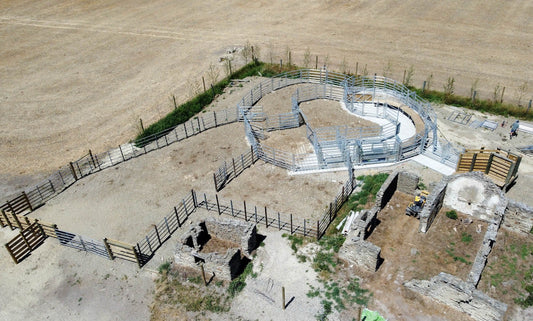
Not sure what cattle yard sizes you actually need? Here's how to match your yard to your head count, your land, and the way you actually work cattle day to day.
There's a common mistake farmers make when setting up their first yards. They either go too small, realise it almost immediately, and end up working in conditions that are cramped and stressful for both them and the animals. Or they go big, tie up more money than they needed to, and spend years rattling around in a yard that's two sizes too large for the job.
Neither is a great outcome. And neither is hard to avoid.
Getting your sizing right comes down to a few honest questions. How many cattle are you handling at any one time? What's your carrying capacity at peak? What are you actually using the yard for? And where do you want to be in five years? Once you've got clear answers to those, the right setup becomes fairly obvious.
Why Comfortable Capacity Matters More Than Maximum Head Count
When farmers talk about cattle yard sizes, the conversation tends to revolve around maximum numbers. How many head can this yard hold? But maximum and comfortable are two very different things, and the gap between them is where cattle handling goes wrong.
Cattle under pressure behave differently. When animals are packed into a space that's too tight, they can't move calmly, they push against each other, and the whole process slows down. Stress levels rise for the cattle and for the people working them. In a yard that's properly sized for your numbers, cattle move through naturally, handling is quicker, and there's far less chance of someone getting hurt.
Think about it this way. The head count stamped on a yard is its maximum physical capacity, not its working capacity. A 6-head yard can hold six cattle. But if you're regularly putting six in there, you're working at the limit. There's no buffer, no room to move, and no margin for the odd day when things don't go to plan.
A practical rule: size for what you'd call comfortable, not maximum. That means your working number should sit comfortably below the yard's rated capacity, not right up against it.
Matching Cattle Yard Sizes to Your Head Count
Here's how to think through the sizing question in practical terms.
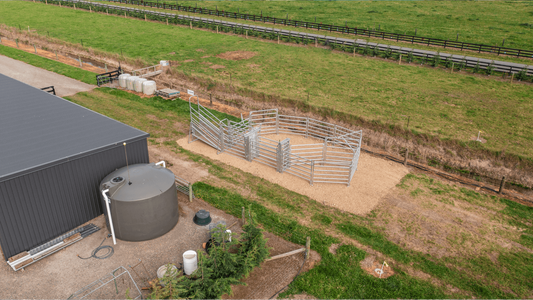
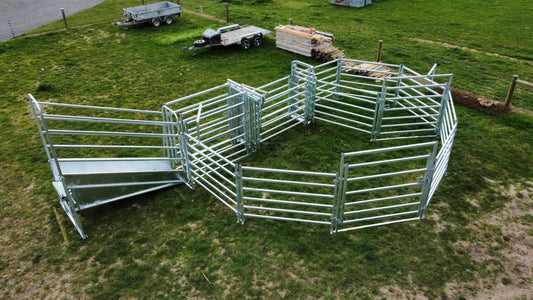
If you're running three or four cattle on a lifestyle block, a 6-head yard is the right starting point. It gives you enough room to work your animals without crowding them, handle a drench, check condition, or load for transport without everything feeling rushed. You're not building a processing facility. You're building something that does the job without overcomplicating it.
At Onefarm, our MAXXUS 6-head yard starts at $5,599 plus GST. It's built for exactly this kind of setup: a small number of cattle, maybe a handful of sheep alongside them, and the occasional job that requires getting them in and contained. If you want to add a loading ramp, the 6-head yard with ramp comes in at $11,499 plus GST, which changes what you can do considerably when transport day comes around.
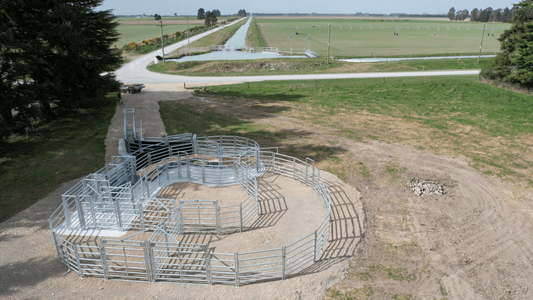
Step up to around eight cattle and the picture shifts. That's when a 12-head yard earns its place. Not because you need the maximum capacity, but because eight cattle working comfortably need that kind of room. You get more space around the crush, better flow through the race, and a genuine buffer for the days when numbers run a little over. Our MAXXUS 12-head yard is $6,199 plus GST, and it's a meaningful upgrade in usability without blowing the budget.
The general rule is if you're regularly working four cattle, the 6-head yard will serve you well. If you're regularly working eight, step up to the 12-head and give yourself room to work properly.
What to Do if You're Planning to Grow
Here's something worth thinking about before you commit to a size: where are you headed?
If you're on a lifestyle block right now running four cattle and you're happy to stay there, a 6-head yard is a sensible, right-sized investment. But if you're quietly planning to build the herd, or you're taking on more land in the next season or two, it's worth thinking about that now rather than after you've already set up.
A yard that's perfect for today can become a bottleneck pretty quickly if your numbers climb. And while upgrading is always possible, it costs time and money that could have been avoided with a bit of planning at the start.
The practical approach is to think one step ahead. If you're running four cattle now but have a realistic path to eight or ten in the next couple of years, the 12-head yard is probably the smarter buy today. You'll work it a little lightly at first, but you won't outgrow it before you've had your money's worth out of it.
Buy for where you're going, not just where you are.
What Carrying Capacity Has to Do With It
Head count at any given moment doesn't tell the whole story. Your carrying capacity, the number of animals your land can support at peak, is the number that should really anchor your yard sizing decision.
For lifestyle block farmers, this matters more than it might seem. Carrying capacity fluctuates. A good wet spring might mean your numbers are up; a dry summer means they're down. The question is what you're likely to be working at your busiest point in the year, not your average.
If your land can realistically carry eight cattle at peak and you're planning to run it hard, that's the number to build your yard around, not the four or five you're sitting on today.
At Onefarm, we talk about comfortable capacity rather than maximum capacity because that's what actually determines how well a yard works. A yard running at 60 to 70 percent of its rated capacity handles better, moves cattle faster, and gives you the room to work safely.
Getting the Sizing Decision Right
There's no universal answer to the cattle yard sizes question. It depends on your land, your herd, how you work cattle, and what the next few years look like for your operation.
What we'd say is this. Don't plan around your maximum. Plan around your comfortable operating number, then allow a sensible buffer above that. Factor in where your herd might go. And if you're genuinely unsure, flick us a message. We're based in New Zealand, we know the setups our farmers are working with, and we'd rather help you get the sizing right the first time than see you back at square one in two years.
That's the kind of call that saves you money, keeps your cattle calmer, and makes the whole job easier every time you bring them in.