A poorly designed cattle yard doesn't just frustrate your crew. It bruises your cattle, burns hours, and quietly chips away at your bottom line every single working day.
The difference between a yard that flows and one that fights you usually comes down to a handful of design decisions made before the first post goes in the ground. Get those right, and everything else gets easier. Get them wrong, and you're stuck with a layout that works against you for the next twenty years.
This guide covers the key principles behind designing a high-throughput cattle yard, whether you're starting from scratch or thinking about upgrading what you've already got.
Why Yard Layout Determines Everything
Most cattle yards are built around the cattle a farmer has right now, not the throughput they'll need in five years' time. That's understandable. Budget is real, and it's hard to plan for growth when you're focused on getting through this season.
But throughput isn't just about scale. It's about how efficiently cattle move through every stage of the process, from the holding area through the race to the crush or loading ramp. A yard that causes cattle to baulk, turn back, or bunch up wastes time on every single run. Over a season, those minutes add up to hours. Over years, they add up to real money.
The goal of good yard design is to work with how cattle naturally move, not against it. That principle shapes every decision below.
Start With How Cattle Actually Move
Cattle are prey animals with wide-angle vision. They move in curves more comfortably than straight lines, they follow the animal in front, and they're easily spooked by sudden changes in light, noise, or surface underfoot.
A high-throughput cattle yard takes all of that into account.
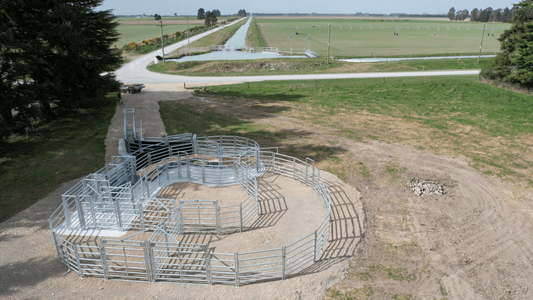
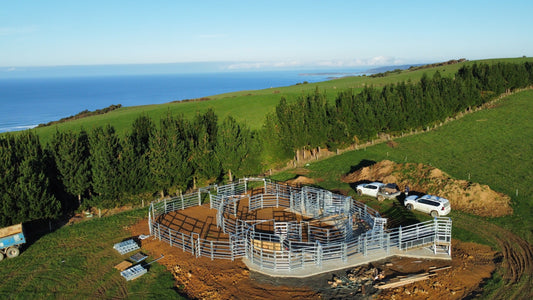
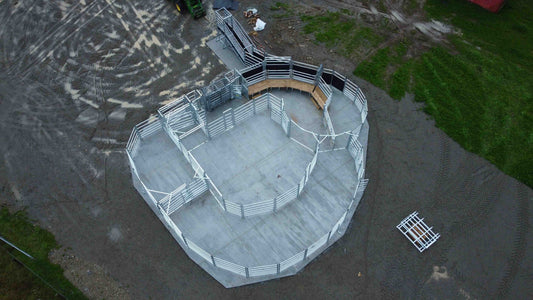
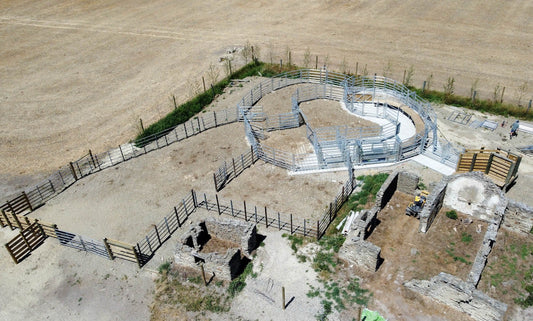
Curved races work better than straight ones because cattle can't see the handler at the end. They move forward because they think they're following the mob, not because someone is forcing them. That's less stress on the animal and less effort from your crew.
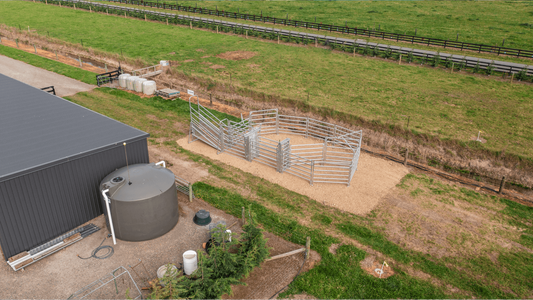
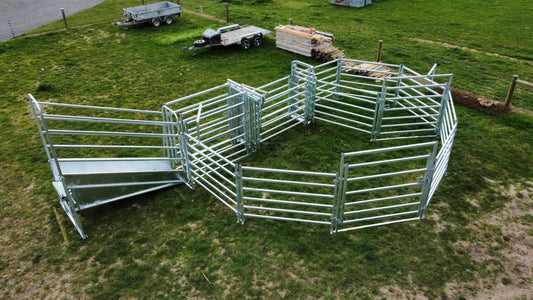
A circular forcing pen is the most effective way to funnel cattle into your race. Cattle moving around the outer wall of a circular pen naturally flow toward the race entry. There's no dead end to baulk at, no corners to jam up in, and no wasted motion. It's a simple principle, and it makes a real difference to how quickly you can move a mob through.
Get the Geometry Right Before You Buy Anything
Rough out your yard layout on paper before you start pricing panels or posts. This sounds obvious, but it's a step a lot of farmers skip in the rush to get something ordered and installed.
A few things to work through at this stage:
Entry and exit points
Your yard needs to receive cattle efficiently from wherever they're coming from. The entry from your holding paddock should allow cattle to flow in with minimal handler pressure. Your exit points should be positioned so processed cattle move cleanly away from the yard without backtracking.
Race alignment
The race is the high-pressure point in any yard. Make sure it's wide enough to prevent cattle from turning around but narrow enough to prevent them from going past each other. A well-positioned forcing pen feeding into a curved race, aligned so the race curves toward the crush, keeps everything moving.
Loading ramp placement
If your yard includes a loading ramp, position it so the truck can access it without reversing through your working area. Driveways and turning circles matter more than most people think when you're trying to move a mob efficiently.
Holding capacity
You need enough holding area to work from without running out of cattle mid-process. A useful rule of thumb is to design for the largest mob you'd realistically bring in at once, not your typical run.
Think About the People Handling the Cattle
A lot of yard design content focuses entirely on animal flow and forgets that your crew is working in that yard for hours at a stretch. Handler fatigue is real, and a yard that's physically demanding to operate is a yard that slows down over the course of a day.
Walkways and catwalks along your race and holding area let handlers move cattle with less effort and less exposure to kicks or crush injuries. Foot grips and anti-slip surfaces on working platforms reduce the risk of a bad fall when conditions are wet, which in parts of New Zealand is most of the time.
Sightlines matter too. Your farm manager needs to see what's happening at the crush, at the race, and in the forcing pen simultaneously. If the yard layout creates blind spots, you're adding communication problems and slowing the whole operation down.
Choose Materials That Won't Let You Down in Five Years
A high-throughput cattle yard takes a beating. Thousands of kilograms of animal pressure, wet conditions, UV exposure, and years of daily use. The materials you choose at the start determine what that yard looks like a decade from now.
Hot-dipped galvanising is the standard for steel yards in New Zealand conditions. It provides corrosion protection from the inside out, not just on the surface, and it holds up in coastal environments where bare or poorly treated steel will rust out quickly.
On the structural side, it's worth knowing that rail profile depth matters more than raw steel thickness. Our 47mm deep cattle rail is 15% stronger than most alternatives because cattle apply lateral pressure against the rails. Rail depth resists that load better than gauge thickness alone. It's a detail that's easy to overlook when you're comparing panels, but it's one that shows up in how a yard holds up over years of use.
Concrete flooring in your crush and race area gives cattle better footing and makes the yard easier to clean. If you're pouring new concrete, a brushed finish gives grip without being so rough it causes problems for cattle moving through.
Plan for What You'll Need Later
One of the most common regrets farmers have about their yards is not leaving room to expand. If you're planning a yard that handles 50 head today, think about whether the layout would allow you to extend the holding area or add an extra race later without pulling the whole thing apart.
Rail spacing, crush width, and race dimensions that comfortably suit one breed or class of stock can become a genuine limitation with another. If there's any chance your operation will diversify, it's worth designing with that flexibility in mind now, rather than working around a yard that was only ever built for one type of animal.
Putting It All Together
Designing a high-throughput cattle yard isn't about spending the most money or building the biggest facility. It's about understanding how cattle move, how your crew works, and how the layout connects those two things into something that actually functions under pressure.
The fundamentals are consistent whether you're running 50 head or 500. Curved races over straight ones, a circular forcing pen, enough holding capacity, good handler access, and materials that are built for the conditions.
If you're working through a design and want a second opinion, our team is happy to talk it through with you. We're a Kiwi operation with specialists across New Zealand, and there's always someone real on the other end of the line. Flick us a message or give us a call on 0800 ONEFARM.