Most farms in New Zealand don't have a full crew on hand every time cattle need to be handled. If you're working the crush alone, you're not unusual. You're just the reality of how most family operations run. Cattle crush use solo is common. What isn't common enough is practical, honest guidance on how to do it without getting hurt.
This post covers the key things you should have in place before you open a gate, the habits that experienced stockmen develop over time, and the equipment factors that make a genuine difference when there's no one else around.
Why Solo Crush Work Carries Real Risk
Working alone with cattle in a crush is one of the higher-risk jobs on any farm. Not because it can't be done safely, but because the margin for error is narrower. A mechanical issue, a misjudged beast, or a moment of inattention lands differently when there's no one standing by to help.
Every year, farmers are seriously injured working cattle alone. Crush gates that stick, animals that thrash unexpectedly, and operators who are tired after a long day all contribute. The risk isn't theoretical, and it doesn't discriminate between experienced operators and beginners.
Understanding that risk clearly is the first step. Respecting it without being paralysed by it is the skill.
Before You Start: Set Up for Solo Success
The single biggest factor in solo crush safety has nothing to do with what happens during handling. It happens before the first animal enters the race.
Know your cattle. Take a few minutes to observe your mob before you start. Are they settled or agitated? Have they been through this crush before? A beast that came through three months ago will behave differently to one that hasn't been handled in two years. Factor that in.
Check the crush before you need it. Locking mechanisms, the head bail, side panels, any adjustable components. Every single one should move freely and lock positively before cattle are anywhere near the yard. A head bail that half-latches is not a head bail you can trust when a 550-kilogram animal decides it's done cooperating.
Clear your working space. Trip hazards are a real danger around a crush. If you're alone and you go down, you've got a problem. Keep the area around the head of the crush free of hoses, tools, and anything else that doesn't need to be there.
Tell someone where you are. This one gets skipped constantly. Before you start, let someone know you're working the crush, roughly how long you'll be, and what to do if they haven't heard from you by a certain time. A quick text takes fifteen seconds. It's the most low-effort safety step there is.
Working the Race: Positioning and Flow
When you're operating solo, your positioning matters more than it does in a two-person setup. You can't be at both ends of the race at once, so you need to work with that constraint rather than against it.
Keep cattle moving in a steady, unhurried flow. Rushing a beast into the crush puts it on edge and makes the next one harder. A calm, deliberate approach takes longer per animal but reduces the chance of something going wrong. When you're alone, a difficult situation mid-handling is a much bigger problem than it would be with a second person on hand.
Position yourself at the side of the crush, not directly behind or in front of the animal. If a beast throws itself backward or forward, you don't want to be in that line. Get your eye trained on the head bail from a safe angle and know exactly how you'll secure it before the animal reaches the right position.
Practice the locking sequence until it's automatic. In a tense moment, you don't want to be thinking about which lever does what.
Crush Equipment That Makes Solo Work Easier
Not all crushes are built with the solo operator in mind, but some features genuinely reduce the physical and mental load when you're working alone.
A well-designed head bail with a positive locking mechanism is non-negotiable. Anything that requires two hands and awkward positioning to operate adds risk when you're trying to manage an animal at the same time. Smooth side panel adjustment matters too, particularly if you're working across a range of animal sizes.
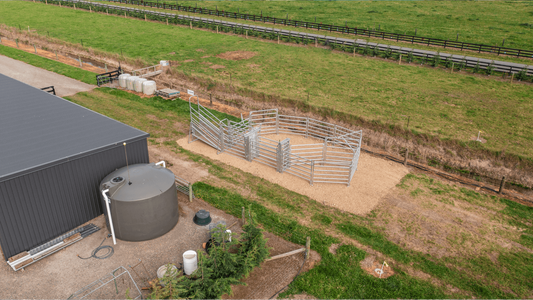
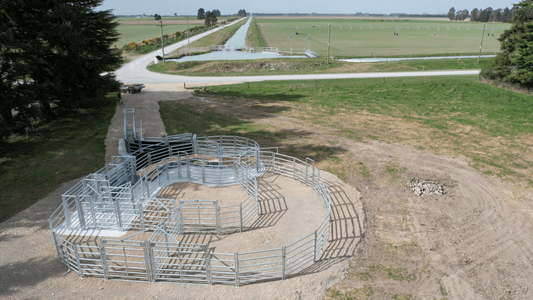
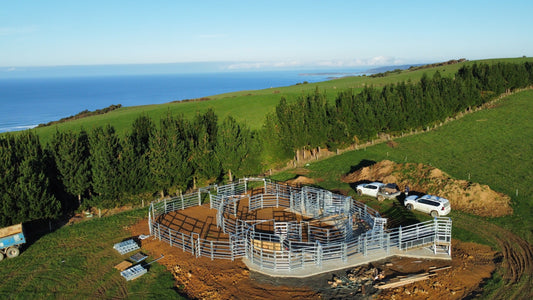
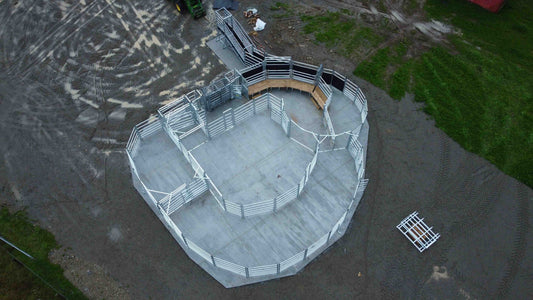
At Onefarm, our Cattle Crushes are built around real working conditions, not showroom ideals. The kind of use that happens on an early morning with one person, a vet kit, and a mob that hasn't been handled since winter. That means practical features that work when you need them to, without fuss.
Strength matters too. Our 47mm deep cattle rail resists lateral pressure better than thinner rail profiles because cattle push sideways, not just forward. That rail depth gives you a crush that holds when a beast decides to test it.
Managing the Mental Load
This doesn't get talked about enough. Decision fatigue is real, and it shows up on handling days.
When you're doing everything yourself, you're tracking the mob, operating the crush, administering treatments, making drafting decisions, and watching for anything that looks off, all at the same time. That cognitive load adds up across a long day. And when you're tired and stretched, your reactions slow and your judgement gets cloudier.
Be honest with yourself about this. If you're two hours in and you're not as sharp as you were at the start, it's not weak to take a break. It's the kind of practical self-awareness that keeps you out of trouble. Experienced solo operators know when to push through and when to stop for ten minutes. That judgement is part of the skill.
If you're feeling rushed because there's too much to do in the available time, that's a planning problem worth solving before your next handling day. A well-laid-out yard with a good race setup reduces physical effort and cognitive load at the same time.
If Something Goes Wrong
Have a plan before you need one.
If you're trapped or injured, can you reach your phone? Think about where it is before you start. Some farmers keep it in a breast pocket rather than a back pocket specifically for crush work. A smartwatch with fall detection adds another layer.
Know your exit routes from the working area. If an animal gets loose inside the yards, where are you going? Running that through in your head before it happens costs nothing.
And if a beast is giving you serious trouble and you're alone, there's no rule that says you have to finish the job today. A difficult animal that you can't safely manage solo is a job for another day with another person. Knowing when to back off is not a failure of nerve. It's good stockmanship.
Build the Right Habits, and the Right Setup
Safe cattle crush use solo comes down to two things working together: the habits you build and the equipment you're working with.
You can develop good habits around any crush. But a crush that's well-designed, built from quality materials, and sized to your actual operation makes those habits easier to maintain. It reduces the points of friction that cause small problems to become big ones.
If you're working with a crush that sticks, rattles, or doesn't lock the way it should, that's worth addressing before your next handling day. Flick us a message or give us a call on 0800 ONEFARM and we'll talk through what would actually suit your setup. No pressure, just a straight conversation with someone who knows the gear.