A single bad step on a loading ramp can cost you far more than a vet bill. Injured stock, a worker off their feet, or a beast that bolts at the wrong moment because the angle was too steep or the footing gave way. These aren't freak accidents. They're predictable, and they're preventable.
Loading ramps are one of those pieces of equipment that most farmers don't think much about until something goes wrong. But if you're regularly moving cattle onto a truck, getting the ramp set up right matters every single time.
Here's what you need to understand about height, footing, and how to make the whole process safer for your animals and your team.
Why Ramp Height Gets Overlooked (Until It Doesn't)
The tray height of a stock truck isn't fixed. It varies depending on the vehicle, how it's loaded, and whether you're dealing with a full-size transporter or a smaller farm ute with a stock crate. That variation matters because a ramp that's matched to one truck height might leave a dangerous gap, or create an angle that's far too steep, for a different one.
Stock don't reason through obstacles. They respond to what they see and feel underfoot. A steep incline, a sudden drop at the top, or a ramp that shifts under their weight will cause hesitation at best and a serious handling incident at worst. Getting the height right isn't just about convenience. It's about keeping animals moving calmly and keeping people out of harm's way.
As a rough guide, most standard stock crates sit somewhere between 700mm and 900mm off the ground. A ramp gradient of no more than 25 degrees is generally considered safe for cattle. Beyond that, you're asking animals to work against their instincts, and that's when things get difficult.
Before you commit to any ramp setup, measure the tray height of the trucks you most commonly use. If you're working with multiple vehicles or using a contractor, find out their configurations before loading day.
The Right Footing for Your Surface
We recommend a level surface at your loading point, ideally a concrete base or well-compacted gravel. A ramp that sinks or tilts mid-load is a genuine hazard, and no amount of grip on the ramp itself will fix an unstable base underneath it.
The surface of the ramp matters too. On our own ramps, we use Australian hardwood. It's grippy underfoot even when wet, and animals move up it without hesitating, as they sometimes do on bare steel.
Matching the Ramp to Your Cattle Yard Layout
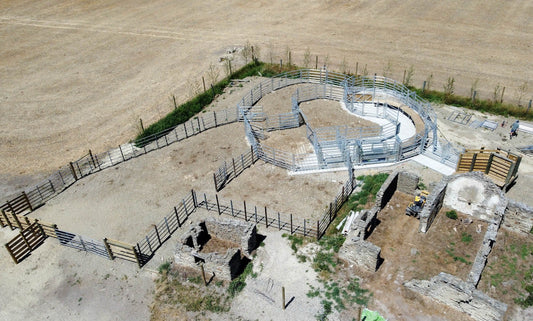
A loading ramp doesn't operate in isolation. It's the last section of your handling flow, and if it doesn't connect cleanly to the rest of your yard, you're going to fight animals every time.
Cattle move best when they're following a clear path with no obvious exits and no reason to stop. That means your race or forcing pen needs to funnel directly into the ramp without a sharp angle, a visual gap, or a sudden change in flooring. If animals can see daylight through the side of the ramp or look down through open-grid steps, they'll slow down or refuse to enter.
Solid-sided ramps work better for cattle than open-framed designs for exactly this reason. The animal can see where it's going without seeing what's underneath. That single design consideration makes a noticeable difference to how smoothly loading goes.
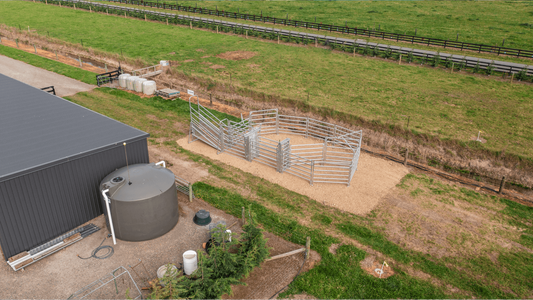
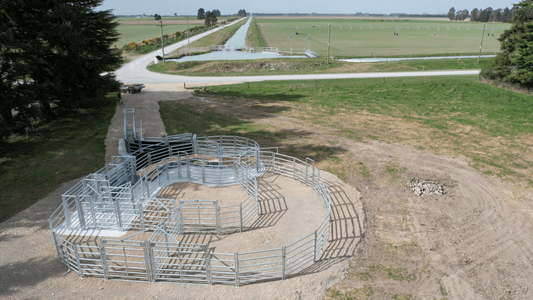
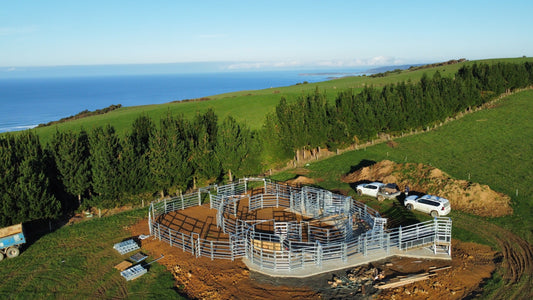
At Onefarm, our yards are designed with loading in mind from the start. The 6-Head and 12-Head Yard packages both have ramp configurations available, so the whole setup works as a system rather than a collection of individual components bolted together after the fact.
Commercial Yards: When a Fixed-Height Ramp Makes More Sense
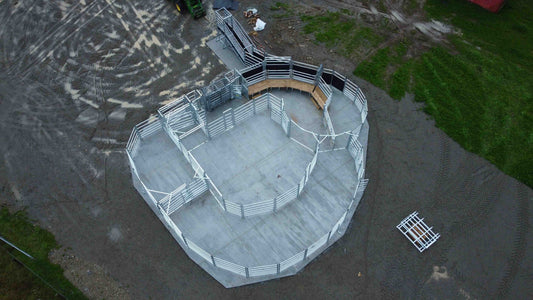
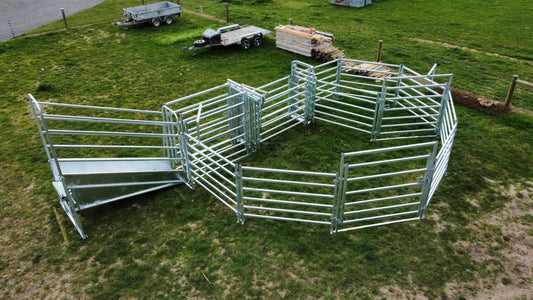
If you're loading the same class of stock truck in the same spot several times a season, our Commercial loading ramp is built for exactly that. At 4m in total length, it's a 3m ramp leading up to a 1m flat platform, with a fixed-height design, set once and doing the same job reliably every time. That platform earns its keep on the way down too, as cattle tend to come off the truck at pace, and the extra space gives them room to find their feet rather than piling into each other at the top.
A full-length catwalk runs the whole way up the side, available left or right-hand to suit your race layout, keeping you alongside cattle the entire climb without stepping into their flow. The gate at the top platform does double duty. It lets the truck driver step into the truck to close off pens without climbing over rails, and once shut, it stops cattle flow immediately, acting as a solid safety barrier between the driver and the next animal through.
It's the same hot-dip galvanised steel as the rest of the Onefarm range, framed with heavy 4-5mm steel, with an Australian hardwood deck and steel cleats for solid, non-slip footing cattle will walk up without hesitating. Backed by a 10-year galvanising warranty and 3-year structural warranty, and built into commercial yard packages from 100 head through to 180-plus head. If you're weighing up whether a fixed or adjustable ramp suits your setup, it's worth talking it through before you commit to a design.
Getting It Right From the Start
If you're setting up a new yard or upgrading an existing one, loading ramp design is worth thinking through properly rather than treating it as an afterthought. The height needs to suit your trucks, the footing needs to suit your ground, and the whole setup needs to connect to your handling flow.
Done well, loading becomes one of the quieter parts of the job. Done badly, it's the part that costs you the most, in time, stress, and occasionally something worse.