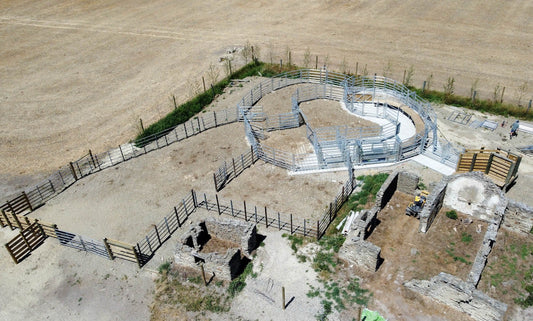
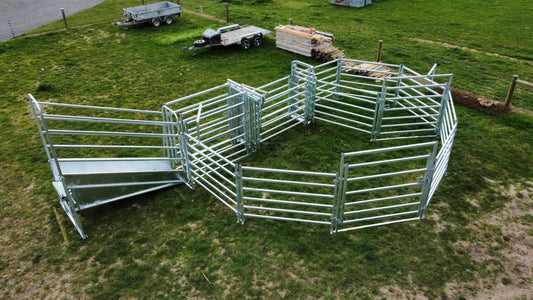
Every year, the same thing happens. The rain arrives, the ground gives up, and suddenly you're wrestling cattle through a yard that's ankle-deep in mud. You're frustrated before you've even started the job.
If that sounds familiar, this post is for you. We'll walk through why muddy cattle yards are more than an inconvenience, what actually causes the problem, and how to build footing and drainage that holds up through a proper New Zealand winter rather than folding after the first serious downpour.
Why Mud Is a Bigger Problem Than Most Farmers Admit
Mud is easy to shrug off as part of farming. But when it starts affecting how you work, it's costing you more than you might think.
A muddy yard slows everything down. Cattle become harder to move confidently. Footing is less predictable, making routine jobs more difficult and increasing the chance of slips for both stock and handlers. What should be a quick job often turns into a frustrating one.
Then there's the ongoing maintenance. Whether you're constantly topping up aggregate, filling ruts, or trying to improve drainage, those small fixes soon become an annual expense. Many farmers find themselves repairing the same problem year after year without ever solving the root cause.
Wet, boggy conditions can also take their toll on your infrastructure. Gates become harder to operate, heavy traffic chews up the ground faster, and yards can quickly become unpleasant places to work after a spell of rain.
The reality is that mud isn't just an inconvenience. It's a sign that your yard isn't coping with the conditions it's being asked to handle.
Rather than continually managing the symptoms, it's often more effective to address the underlying cause with a yard that's designed to stay drier, drain better, and keep working through the winter.
The Real Cause of Muddy Yards (It's Rarely What You Think)
Farmers often blame the surface. The surface is rarely the whole story.
A muddy cattle yard is almost always a drainage system problem, not just a footing problem. The yard surface gets the blame because it's what you see. But what's happening underneath and around it is usually more important.
There are a few things worth looking at.
Where is the water coming from?
Roof runoff from nearby sheds is one of the most overlooked contributors. If your yard sits downslope from a large roof with no guttering or diversion in place, that water has to go somewhere, and it's often straight into your working area. Before you touch the yard surface, trace where water flows during a heavy rain event.
What's your soil doing?
New Zealand has a lot of clay-heavy soils, particularly through Waikato, Taranaki, and the top of the South Island. Clay doesn't drain. It compacts, holds moisture, and turns slick the moment cattle start working it. If you're sitting on heavy clay and you've put a thin layer of aggregate over the top without any base preparation underneath, that aggregate will disappear into the clay within a season or two. This is one of the most common and most expensive mistakes to keep making.
Is your yard graded properly?
Even a well-constructed yard will pond water if it sits flat. A slight fall, generally two to three percent in the right direction, gives water somewhere to go. If your yard was installed without attention to grade, or if it's settled unevenly over time, standing water is the predictable result.
What's happening in the laneways?
A yard can be perfectly drained and still end up boggy if cattle are tracking mud in from waterlogged laneways every time they move. The drainage chain runs from the paddock to the laneway to the yard. If one section isn't working, it affects everything downstream.
Building a Base That Actually Holds
Once you understand where the water is coming from, you can start building something that lasts.
The foundation matters more than the surface. Most muddy cattle yard drainage failures trace back to poor base preparation rather than the wrong choice of surface material. You can put the best aggregate money can buy over a poorly prepared clay base, and it will still sink.
The standard approach that holds up in NZ conditions starts with excavation. You need to get down past the disturbed topsoil layer to a stable substrate. How deep that is varies depending on your soil type and the amount of traffic the yard takes, but as a rough guide, 200 to 300mm is a reasonable starting point for most cattle yards. From there, a compacted layer of granular fill or hardfill gives you the structural base you need before anything else goes on top.
On top of that, a compacted layer of AP40 or similar crusher run gives you a surface that sheds water without becoming a bog. Some farmers then put a finer layer on top for underfoot comfort. That's a reasonable choice, but it's the base layers doing the real work.
Getting the Surface Water Away
Good base preparation keeps the yard from sinking. But you still need the water to move off the surface and away from the area.
Grade matters here. A yard sitting dead flat will hold water regardless of how well it's built underneath. Two to three percent fall across the yard is the target. That sounds small, but it's enough to keep water moving. Work out which direction makes sense for your site, and make sure the fall runs toward a point you can actually drain to, not just toward a fence line.
Perimeter drainage is the next piece. A cut-off drain or interceptor drain upslope of the yard will intercept surface and subsurface water before it reaches your working area. This is especially important if your yard is at the bottom of a slope. Diverting that water before it enters the yard is far more effective than trying to drain it once it's already pooled.
Downslope from the yard, you need somewhere for that water to go. A drain or sump at the low point of the yard, connected to a channel or piped outlet, completes the system. Some farmers also use soakage pits if they're on free-draining soil further from the yard surface, but in heavy clay country you'll generally need to pipe it away to a proper outlet rather than relying on infiltration.
Connecting the Whole System
It's worth stepping back and looking at this as one connected system rather than a series of separate problems.
Your laneways feed into your yard. Your yard sits under or near your shed. Your shed roof sheds water somewhere. All of these interact. A muddy cattle yards drainage fix that addresses only one part of the chain will still let you down at the weakest link.
If the laneways are the problem, a layer of compacted metal or recycled concrete rubble in the worst sections can make a significant difference. Some farmers also use geotextile-backed metal in laneways, particularly through gateways and at the point where the laneway meets the yard, because those are the spots cattle track the most mud from.
When to Act and What to Do Right Now
If your yard is already in a bad way mid-winter, your options are more limited than they would have been in autumn. You're not going to excavate and rebuild in wet conditions, and you probably know that. But there are things you can do that will help you get through the season and set you up to fix it properly when the ground firms up.
Temporary aggregate over the worst areas is still worth doing if it keeps cattle from slipping. Keep it away from areas where it's just going to disappear into soft ground and note where those spots are because they're telling you where the drainage is failing.
Redirect what roof water you can right now. If a downpipe is dumping water into your yard area, a few metres of spouting and a temporary diversion can make a real difference without any ground disturbance.
Mark the problem spots. Take some photos. Note where the water is pooling and where it's coming from. When conditions dry out enough to work properly, you'll have a clear starting point.
If you're planning a new yard or a full rebuild, autumn is a great time to act. The ground is still workable, conditions are dry enough for compaction to happen properly, and you'll have the yard in shape before the worst of the winter weather arrives.
The Yards Are Only Part of It
Cattle yards drainage is a site-wide problem as much as it is a yard problem. Getting the yards right matters, but so does the setup around them.
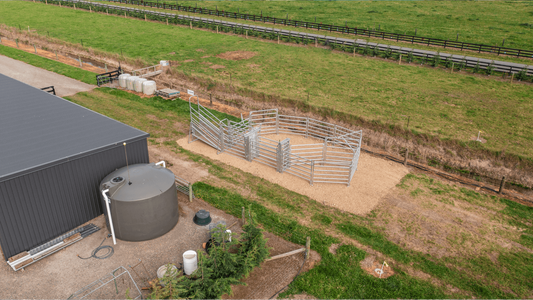
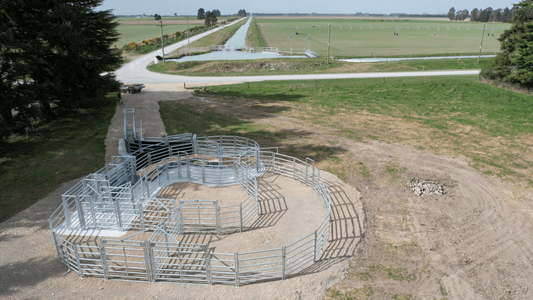
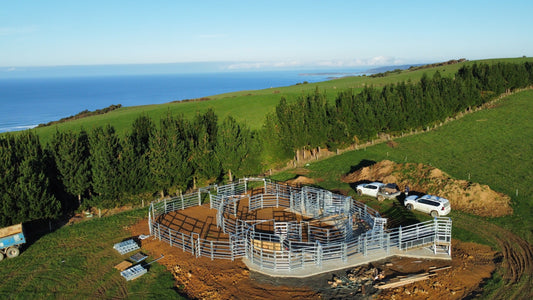
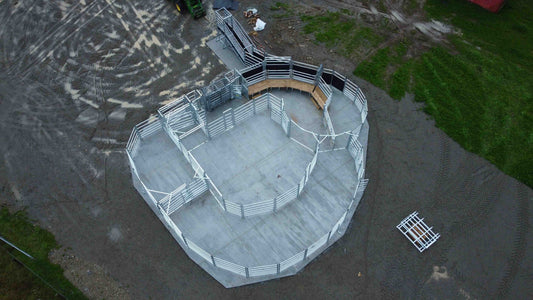
At Onefarm, our yards are built to handle the conditions NZ farmers actually deal with. Whether you're running a commercial operation or a smaller lifestyle block with a handful of cattle, a well-designed yard on a properly prepared base is something you should only have to build once.
If you're thinking about a new yard or want to talk through what would suit your setup, flick us a message or give us a call on 0800 ONEFARM. There's always a Kiwi on the other end who knows what a real NZ winter does to a badly drained yard.