If your cattle yard frustrates you every single time you use it, that's not bad luck. That's bad design.
It's one of the most common things we hear from lifestyle block owners. They've invested real money into their property, they're genuinely passionate about running a few head, and then every working day in the yard turns into a wrestling match. Cattle won't move through. Gates open the wrong way. There's nowhere to stand that isn't in the flight path of a stressed animal. It's exhausting, it's slow, and honestly, it's dangerous.
Here's the thing: the problem almost never comes down to the size of the yard. Small yards can work brilliantly. The issue is that most small yards are set up using guesswork, afterthoughts, and whatever materials were cheap or handy at the time. And then people spend years working around the problems those choices created.
You don't need a commercial-scale setup to handle cattle like a professional. You just need to make smarter decisions from the start, or be willing to fix the ones that have been costing you time and confidence.
The Layout Is Doing More Work Than You Realise
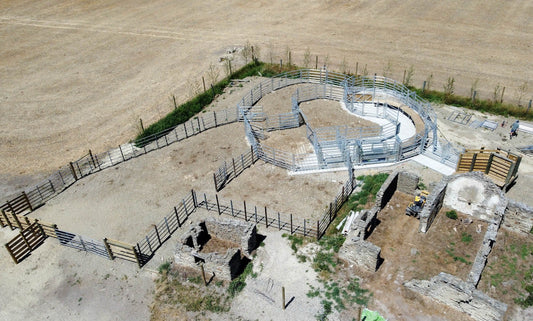
Cattle handling research, including the widely respected work of animal behaviourist Temple Grandin, has shown consistently that cattle move more calmly when they can't see the full extent of where they're being directed. They flow better through curved races. They baulk at shadows, sudden changes in light, and anything that looks like a dead end.
Most small yards ignore all of this. They're built in straight lines because straight lines feel logical to humans. But what feels logical to you doesn't feel safe to a 400kg animal with strong flight instincts and no idea what you're trying to do.
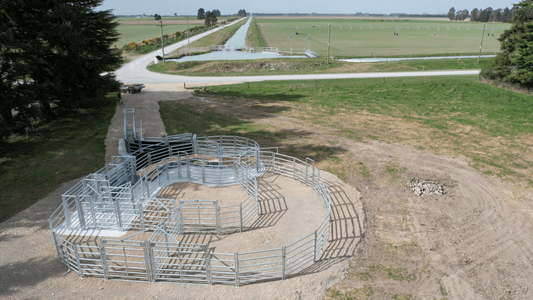
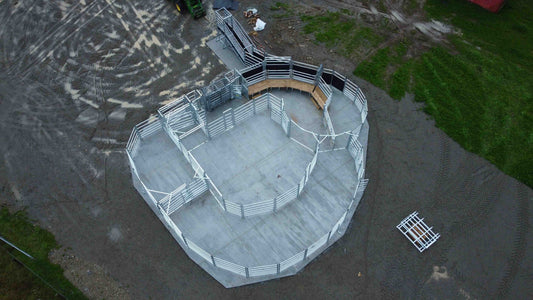
Even on a compact block, a well-designed layout makes a measurable difference. A curved approach to your crush. A forcing pen that feels like a natural progression rather than a corner to be trapped in. Solid-sided panels in the right spots to reduce distractions. These aren't luxury features reserved for large operations. They're the baseline of functional design, and they're available at any scale.
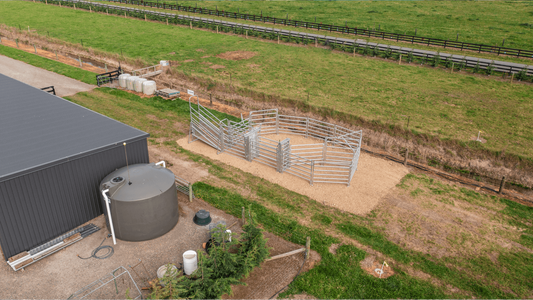
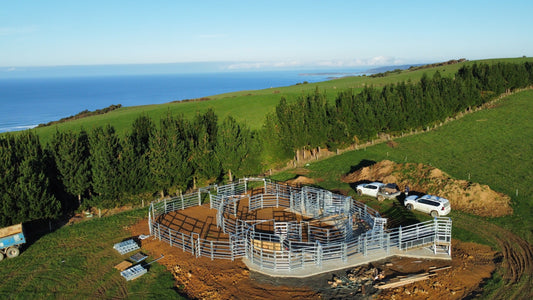
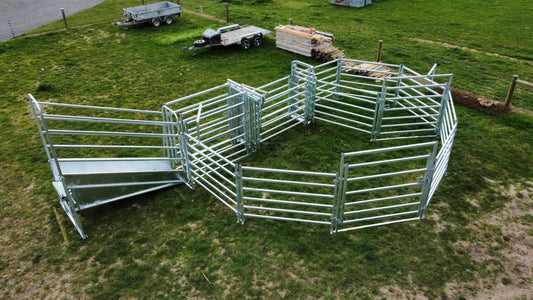
The MAXXUS range from Onefarm was built with this exact reality in mind. Sized specifically for lifestyle blocks and smaller operations, it brings proper design thinking to yards that don't have hectares to sprawl across. That means you get the geometry that makes cattle handling work, in a footprint that makes sense for your property.
Solo Handling Is a Different Problem Entirely
One thing that rarely gets acknowledged in general cattle handling advice: most lifestyle block owners are working alone. Or close to it. There's no team of farm hands. There's you, maybe a partner, and a yard that was never designed to be operated by one person.
This creates genuine risk. Cattle that need constant repositioning. Gates you can't reach from a safe position. A crush that requires you to move through a pen that still has animals in it. Every inefficiency in a yard layout becomes a safety issue when you're solo, because you can't compensate for a bad design with extra hands.
Good small yard design accounts for this reality directly. Gate placement matters enormously. You want to be able to control the flow of animals from a consistent, protected position. The crush needs to be operable without putting yourself in a dangerous spot. Escape routes need to be real, not theoretical.
The MAXXUS system is designed around exactly this kind of practical solo workflow. Gates are positioned so you can actually work them. The layout logic means you're guiding cattle movement rather than chasing it. That's not a small thing when you're working by yourself on a Tuesday morning.
What You're Standing on Matters as Much as What You're Standing Behind
This one surprises people. The focus in most yard conversations goes to panels, gates, and the crush. But the floor situation in a small yard can be the difference between a yard that works and one you dread.
Mud is the obvious enemy. A wet, boggy yard is slippery for animals, which increases stress and unpredictability. It's also unpleasant and tiring for you to work in. But concrete, done wrong, creates its own problems. Too smooth and you've got the same slip risk, especially in wet conditions. Poorly graded concrete holds water and becomes a mud pit anyway.
The practical answer is adequate drainage, appropriate surface texture, and thinking carefully about where your high-traffic zones actually are. Around the crush entrance. Along your forcing lane. At the gate you use every single time. These are the spots worth investing in properly. The rest can be managed with good groundwork and decent compacted metal.
For lifestyle blocks especially, it's worth thinking about this before you pour concrete or set posts, because retrofitting drainage is expensive and disruptive. Get the ground right first, and everything else works better.
Your Panels Need to Last Longer Than Your Enthusiasm
The lifestyle block market is full of cheap imported yard panels. They're priced to look like a bargain, and for about two seasons, they sometimes are. Then the rust starts. Then the welds fail. Then a panel gives way at exactly the wrong moment.
Hot-dipped galvanised steel is the standard worth paying for. It's not an upsell. It's the difference between infrastructure that lasts a generation and something you're patching every few years. For a small yard that you'll use regularly, that longevity calculation matters more than it might seem. You're not replacing one panel in a 200-head commercial setup. You're replacing a meaningful percentage of your whole yard.
It's also worth understanding that raw steel thickness isn't the whole strength story. Rail profile depth is actually the key indicator of how well a panel handles lateral load, which is exactly the kind of pressure cattle apply. Onefarm's 47mm deep cattle rail is 15% stronger than most alternatives for exactly this reason. Depth resists sideways force better than gauge alone.
Don't Set Up for What You Have. Set Up for What You Want.
Here's an opinion that might push back on conventional advice: don't size your yard purely to your current herd.
Most lifestyle block owners who get into cattle end up running more than they originally planned. It happens naturally. You get comfortable. You have good paddocks. You add a few more head. And suddenly your yard, sized perfectly for six, is awkward for twelve and genuinely unworkable for twenty.
The MAXXUS 20 Head and MAXXUS 27 Head yards give you real room to grow without asking you to commit to commercial-scale infrastructure. They're compact enough to install sensibly on a lifestyle block, but sized so you're not immediately outgrowing them. That's the right kind of future-proofing for this kind of operation.
The Honest Bottom Line
Small doesn't have to mean makeshift. Lifestyle block cattle owners often end up with yard setups that look cobbled together because the market doesn't take them seriously. Generic advice is aimed at beginner hobby farmers or large-scale commercial operators. There's not much in between.
But the principles that make a good cattle yard aren't scale-dependent. Good flow. Safe solo operation. Durable materials. Thoughtful layout. These things matter whether you're running 8 head or 800.
If your current yard is fighting you, it doesn't mean you're doing it wrong. It probably means the yard was never designed to do the job you're asking of it. That's fixable. And fixing it changes the whole experience of running cattle on your block, from something that feels like a chore and a liability to something you actually enjoy.
Flick us a message if you want to talk through what a proper small yard setup looks like for your specific property. There's a real person on the other end who'll give you a straight answer.