The material you build your yards from today will shape how much you spend, how hard you work, and how safe you feel for the next two decades. That's worth thinking about carefully before you order a single rail or post.
Lifestyle block owners face a version of this decision that's different from large commercial operations. You're typically handling smaller mobs, often working alone or with one other person, and you're weighing every dollar because this block is a passion project as much as a farming operation. The wrong call doesn't just cost money. It costs confidence.
So let's look at the three main options for cattle yards on lifestyle blocks and give you a straight answer about which one actually makes sense.
Why the Material Decision Matters More Than You Think
Most people approach this as a budget question. Timber is cheaper upfront, steel costs more, hybrid sits somewhere in the middle. And that's true, as far as it goes.
But the real question is cost per year, not cost today.
A timber yard built for $8,000 that needs repairs every three to four years, and needs to be partially rebuilt within a decade, isn't actually a cheap yard. A steel yard that goes in at $15,000 and runs maintenance-free for 25 years is the better deal. The maths isn't complicated once you frame it that way.
There's also the safety side of this, which doesn't get enough airtime. Lifestyle block owners handling cattle without a full crew need yards that hold. A rail that gives way when a 500kg bull decides he's had enough of the crush isn't just inconvenient. It's dangerous. The structure you're working in is your first line of defence, and that's not something worth compromising on.
The Case for Timber Cattle Yards
Timber has a genuine appeal that goes beyond nostalgia. A well-built timber yard looks at home on a rural property in a way that's hard to argue with. It fits the land. It fits the identity. For many lifestyle block owners, that aesthetic connection to traditional farming is a real part of why they bought the block in the first place.
Timber also has some practical advantages. It absorbs impact and flex in a way rigid steel doesn't, which can reduce stress on animals in a well-designed yard. It's easier to source locally in many regions, and a capable farmer or fencer can repair it themselves with basic tools and a few hours.
But here's where honesty matters.
Timber yards in New Zealand's climate face a relentless enemy: moisture. Posts rot at ground level. Rails split. Hardware corrodes. A timber yard that isn't built with pressure-treated H5-rated timber, maintained regularly, and checked after every wet season will start failing faster than most people expect. The upkeep isn't difficult, but it is constant.
There's also a structural ceiling with timber. You can build a functional yard, but it's harder to build one that's genuinely animal-movement-optimised, with the kind of curved race design and quiet-handling geometry that reduces stress on cattle and handlers alike. Timber constrains your design options in ways that steel simply doesn't.
For lifestyle blocks where you're running a small, stable mob and you have the skills and time to maintain the yard well, timber can do the job. But go in with clear eyes about what you're signing up for.
The Case for Steel Cattle Yards
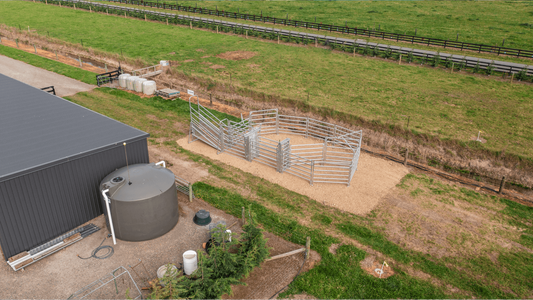
Steel is what we build at Onefarm, so you'd expect us to favour it. But the reason we build steel yards isn't loyalty to the material. It's because steel consistently delivers better outcomes for the farmers we work with, from commercial operations to seven-acre lifestyle blocks.
And after seeing what happens when farmers try to cut corners on yard materials, we think it's worth being direct about this.
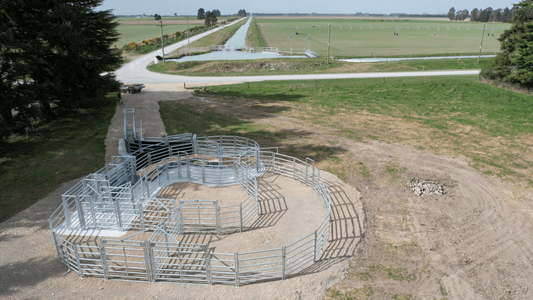
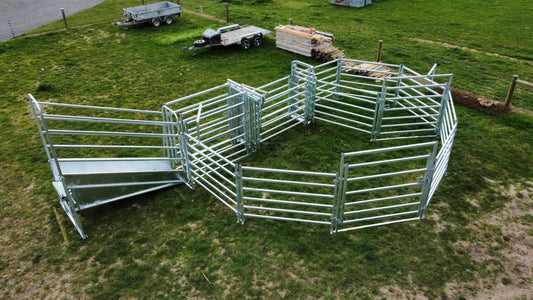
Steel holds. Hot-dipped galvanised steel doesn't rot, doesn't split, and doesn't corrode under normal conditions. The structure you put in on day one is the structure you'll be working with in year twenty. For a solo operator handling cattle without backup, that consistency matters enormously. You need to trust your yards, not wonder whether that corner post is still solid.
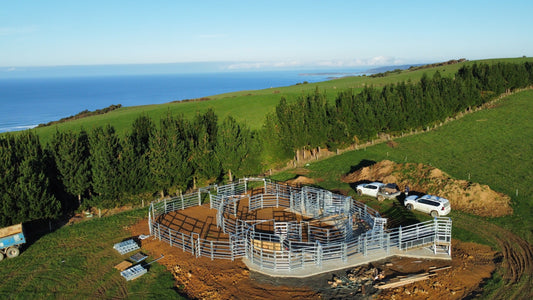
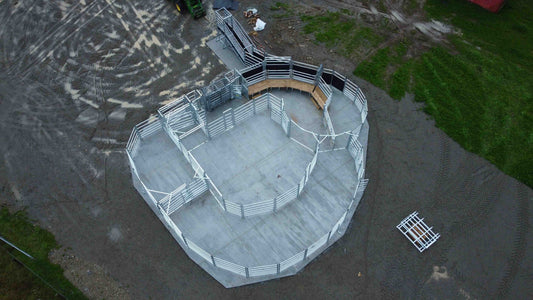
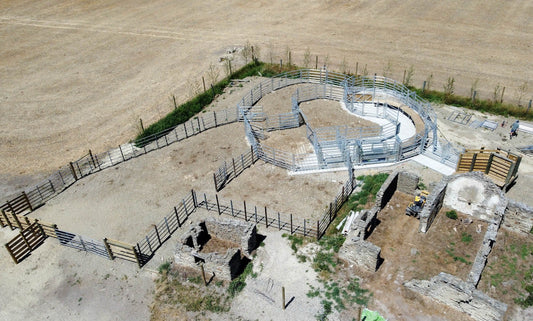
Steel gives you better design options. One of the biggest gains from steel isn't actually the material, it's what the material lets you do. Curved races, proper forcing pens, correct gate placement, loading ramps built to the right height. The geometry that makes cattle handling calmer and safer is much easier to achieve in steel than in timber. When you're working alone and a mob is moving through the race, a well-designed steel yard does a lot of the work for you.
Steel suits the solo operator. This point doesn't get talked about enough when it comes to cattle yards for lifestyle blocks. When you're short-handed, your yards need to compensate. That means fewer pinch points, gates that swing correctly, a crush you can operate without a second person. A properly specced steel yard is designed around how cattle actually move, and how a single handler can work with that movement rather than against it.
The numbers make sense over time. Higher upfront cost, near-zero ongoing maintenance. No annual treating, no replacing rotted posts, no patching split rails before the next muster. When you run the numbers across a ten or fifteen year window, steel comes out ahead in most cases.
If we had to give one straight recommendation for lifestyle block owners, this is it. Steel, well-specced from the start, sized correctly for your mob and your site.
The Case for Hybrid Cattle Yards
Hybrid systems combine a steel frame and structure with timber infill panels or rails. The idea is to get the durability of steel where it matters most, and use timber to bring costs down where the structural demands are lower.
For the right situation, hybrid can be a sensible middle ground. You get the strength and longevity of a steel frame, with a slightly lower upfront cost than a fully steel build. The timber components will still need maintaining, but because the primary structure is steel, you're not facing the same risk of wholesale failure that you get with a full timber yard.
The honest caveat here is that hybrid systems can vary a lot in quality depending on how they're built. If the timber is undersized, or the connection points between steel and timber aren't well-engineered, you can end up with the worst of both worlds: the cost of steel without the full performance, and the maintenance requirements of timber without the cost savings. Get proper specs before you commit.
Hybrid makes most sense for lifestyle block owners who have a genuine budget constraint but want to upgrade from a basic timber setup without going straight to a full steel build. It's a legitimate step up, as long as you understand that it comes with ongoing maintenance requirements.
So Which One Is Right for Your Block?
Here's the straight version.
If you have the budget for steel, build steel. You'll spend less time maintaining it, work more safely in it, and not spend the next decade wondering whether your yards will hold for another season. The upfront cost is higher, but for most lifestyle block owners handling cattle regularly, the long-term case is clear.
If budget is the real constraint right now, a well-specced hybrid system is a more honest choice than cheap timber. You'll get a solid primary structure and can improve the timber elements over time as funds allow.
Timber alone is worth considering only if you're genuinely handy, committed to regular maintenance, and your mob is small and stable. Even then, go in knowing that a timber yard is a maintenance relationship, not a set-and-forget solution.
The best cattle yards for lifestyle blocks are the ones that keep you and your animals safe, hold up season after season, and don't demand more of your time and money than the job needs. By that measure, steel earns its place at the top of the list.
If you're working out what would suit your block, flick us a message. We're happy to talk through the options without the sales pitch.